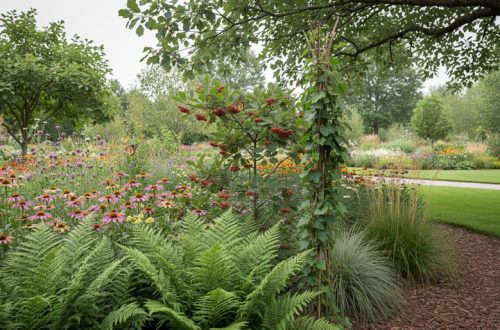
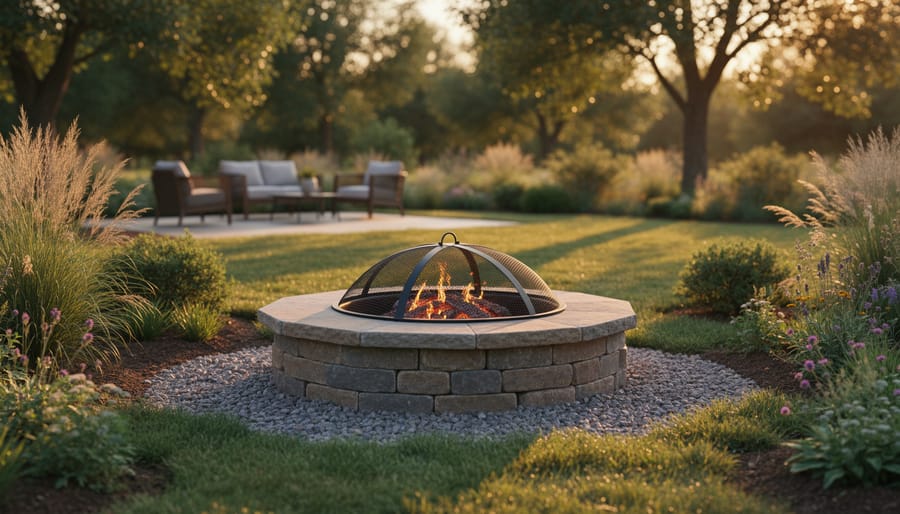
You can create a thriving wildlife-friendly yard around your outdoor fire pit by positioning the pit at least 15 feet from native plantings, using spark screens, and choosing ground cover that tolerates occasional heat while providing habitat. This balanced approach lets you enjoy cozy evenings by the fire without compromising the health of visiting birds, polliniers, and small mammals that depend on your garden.
The key is thoughtful placement and design. Fire pits don’t have to mean barren safety zones. When you combine proper clearances, similar to what professionals recommend for chimney repair Clearwater services, with smart plant choices, you create microclimates that welcome wildlife while keeping your space safe.
Many gardeners worry that fire features and wildlife habitat can’t coexist, but our community has proven otherwise. Melissa in Portland surrounded her fire pit with a 10-foot gravel buffer, then planted native grasses and shrubs just beyond. She reports regular visits from juncos, butterflies, and even the occasional rabbit. The trick? She uses her fire pit responsibly and lets the outer zones flourish with seed heads and dense cover.
Wildlife gardening expert Dr. Sarah Chen confirms this approach works: “Animals are remarkably adaptable. As long as you maintain safe distances, use your fire pit intermittently rather than daily, and preserve food sources and shelter in the broader yard, you’ll see little negative impact.”
This guide walks you through every step, from measuring clearances to selecting plants that thrive near (but not too near) heat sources, so you can enjoy both fire-lit gatherings and a yard buzzing with life.
What You’ll Need to Get Started
Before you break ground, gather your planning materials and assess what you already have. You won’t need specialized equipment for most of this project. Start with a tape measure, garden hose or spray paint to mark zones, and a smartphone or camera to document your site’s existing conditions throughout the day. Notice where shadows fall, which direction prevails for wind, and where wildlife already visits your yard.
Your plant selections drive the habitat’s success. Contact your local Extension office or Master Gardener program for native plant guides specific to Northern Virginia. The Virginia Native Plant Society and Arlington County’s Tree and Shrub Guide offer vetted species lists. Many Extension offices provide free printed guides at community events, or you can download PDFs. Native plant nurseries in your region stock appropriate choices and give reliable advice about mature sizes and wildlife value.
Here’s what you’ll typically need:
- Planning tools: tape measure, marking flags or spray chalk, soil test kit, notebook for observations
- Hardscaping materials: gravel, stone pavers, or decomposed granite for safety zones
- Native plants: groundcovers, perennials, shrubs, and trees suited to your light and moisture conditions
- Habitat features: shallow water basin or birdbath, untreated wood for brush piles, nesting boxes
- Safety equipment: fire extinguisher or water source, spark screen for fire pit, metal edging for clearance zones
- Optional enhancements: landscape fabric, mulch, soaker hoses, rain barrel for irrigation
Buy plants in small pots or plugs rather than large specimens. They establish faster and cost less. Check neighborhood gardening groups for plant swaps, where you can obtain native species from local yards already adapted to your microclimate. Many Master Gardener chapters hold native plant sales each spring with plants propagated specifically for wildlife gardens. Source hardscaping materials locally when possible. Crushed stone from regional quarries supports your local economy and reduces transportation impacts.
Safety First: Protecting Wildlife and Your Family
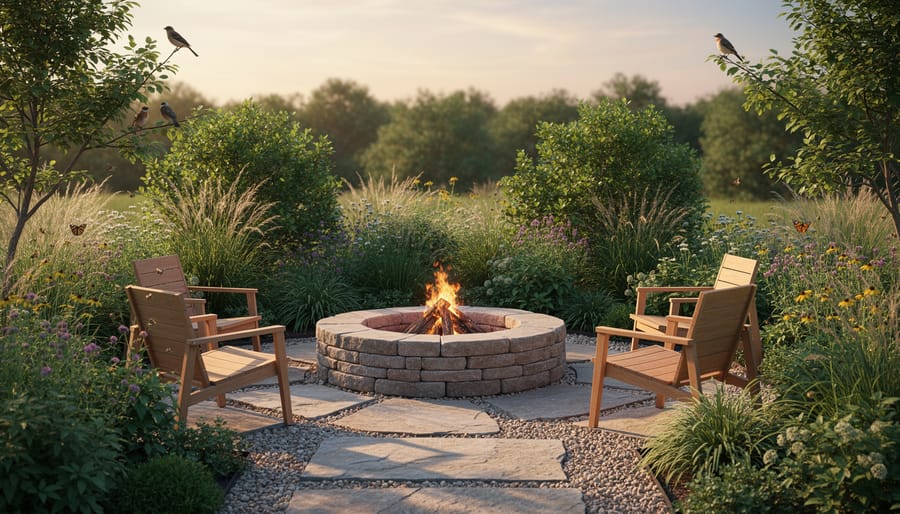
Before you dig, plant, or light your first fire, understanding safety fundamentals protects both the wildlife you’re hoping to attract and everyone who gathers around the flames. Skipping these steps can turn a well-intentioned garden into a hazard.
Start with clearance zones. Fire pits need 10 to 20 feet of non-flammable space in all directions, the exact distance depends on your pit’s size and fuel type. Wood-burning fires require larger buffers than propane or natural gas. Within this zone, use gravel, pavers, crushed stone, or bare soil. Don’t plant anything combustible here, no matter how wildlife-friendly it seems. Beyond the immediate clearance, choose fire-resistant plants with high moisture content and low resin or oil levels. Avoid highly flammable species like ornamental grasses with dry seed heads, conifers, and anything with papery bark near seating areas.
Check your local fire codes before you build anything. Many counties and municipalities restrict open fires during dry seasons, require permits, or mandate specific pit designs. Arlington and Alexandria residents can verify current regulations through their local fire marshal’s office. Some areas ban wood-burning altogether but allow gas units.
Spark containment isn’t optional. A quality spark guard or mesh screen prevents embers from escaping and igniting nearby plants or mulch. Wind shifts unexpectedly, and even a small spark can travel surprising distances on a breezy evening.
Timing matters for wildlife. Avoid lighting fires during nesting season if birds are actively raising young nearby, and never disturb dens, nests, or burrows during site preparation. Walk your property first and note where wildlife already congregates. If you spot active nests or burrows within 30 feet of your planned fire pit location, choose a different spot or delay construction until young animals have fledged or moved on.
Step-by-Step: Creating Your Wildlife Fire Pit Garden
Choose Your Fire Pit Location Strategically
Your fire pit’s location sets the foundation for everything else. Start by observing your yard for a full day, noting where wildlife already moves and congregates. Look for paths between shrubs where rabbits hop through, spots where butterflies linger in afternoon sun, or tree lines where birds flit from branch to branch. You want to avoid cutting through these natural highways.
A central placement often works best for smaller yards. It creates a human-use zone that pushes wildlife habitat to the edges, where animals feel safer anyway. Edge placement near property boundaries can work beautifully in larger spaces, letting you look outward toward a wilder zone while keeping your back to the house.
Sun exposure matters more than you might think. A spot that gets morning sun but afternoon shade stays cooler, reducing fire risk and making nearby plantings more resilient during dry spells. Check prevailing winds too. Position your seating so smoke blows away from both your guests and any nearby nesting boxes or pollinator gardens you plan to install.
If you have a pond or birdbath, keep your fire pit at least thirty feet away. Birds and other wildlife need safe access to water without navigating heat and smoke.
Create Safety Zones with Purpose
Your safety clearance zone doesn’t have to be a barren circle of rocks. Start by measuring a 10-foot minimum radius from your fire pit’s edge, 15 to 20 feet is better if space allows and local codes permit. This area must stay free of tall, dry vegetation and woody materials that could ignite from sparks or radiant heat.
For the inner zone closest to the pit, use non-combustible hardscaping: pavers, flagstone, or decomposed granite. These materials won’t catch fire and they create comfortable seating areas. Moving outward, transition to pea gravel or river rock mixed with low, moisture-retaining groundcovers like creeping thyme or sedum. These plants stay green, hug the ground, and won’t fuel a fire.
Master Gardener Linda Chen in Arlington faced this exact challenge in her narrow yard. She couldn’t afford the 20-foot clearance without losing her entire garden space. Her solution? A layered approach using circular stone borders to define zones, then planting clumping fescue and native wild strawberry in the outer safety ring. The groundcovers stayed lush, required minimal watering, and attracted early-season pollinators. Beyond that border, she built up her taller native plant layers, creating a natural privacy screen that also served as a wildlife corridor along her fence line.
Design Habitat Layers Beyond the Safety Zone
Once your safety zone is secure, the real magic begins in the layers beyond. Think vertically and work outward from the fire pit’s edge.
Start your transition zone 15 to 25 feet out with low groundcovers and perennials under 18 inches tall. Native violets, wild strawberry, and creeping phlox create dense mats that shelter ground-nesting bees and provide food for box turtles and ground-feeding birds. These plants won’t obstruct your fire pit views while they establish essential habitat features right where you can watch wildlife activity.
The middle tier, roughly 25 to 40 feet from the fire, handles the heavy lifting for biodiversity. Native shrubs like chokeberry, winterberry holly, and blueberry grow three to six feet tall, offering berries for songbirds and cover for rabbits and nesting catbirds. Intersperse clump-forming grasses such as little bluestem or switchgrass, they sway beautifully, host butterfly larvae, and their seed heads feed sparrows and finches through winter.
Your outer edge, 40 feet and beyond, can support canopy trees like oak, maple, or serviceberry. These anchor the ecosystem, hosting hundreds of caterpillar species that feed baby birds, while their branches provide hawk perches and squirrel highways. Mature trees also create natural privacy screening, making your fire pit area feel like a secluded woodland retreat rather than an exposed circle in the yard.
Select Native Plants for Your Region
Native plants adapted to your region naturally resist drought and require less water, making them inherently less flammable than thirsty exotics. For Northern Virginia gardeners, start with resources from Arlington County’s native plant center or Alexandria’s environmental programs, which list species proven to thrive locally while supporting wildlife.
Focus on moisture-retaining perennials and shrubs with high leaf moisture content. Black-eyed Susan, purple coneflower, and wild bergamot are excellent native pollinator plants that stay relatively fire-resistant through the growing season. For structure and bird habitat, consider Virginia sweetspire, winterberry holly, and serviceberry, all outstanding plants for birds that produce berries while maintaining lower flammability than ornamental grasses.
Extension Master Gardeners recommend designing for three-season interest. Early spring ephemerals like Virginia bluebells feed emerging pollinators, summer bloomers sustain activity during peak months, and fall-fruiting shrubs provide critical food as birds migrate. This layered approach means something is always actively supporting wildlife, transforming your fire pit surround into a dynamic habitat rather than static landscaping.
Avoid highly resinous plants like junipers or ornamental grasses that cure into tinder near the safety zone.
Add Water and Shelter Features
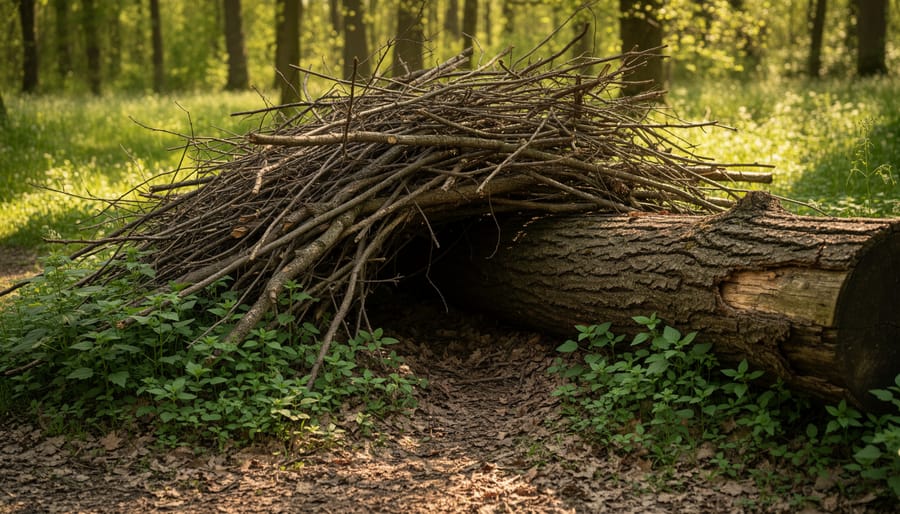
Water sources and shelter structures turn a fire pit area into a genuine wildlife hub. Position birdbaths 15-20 feet from the fire pit where birds can drink and bathe without smoke drift, shallow dishes (1-2 inches deep) with rough surfaces work best. If space allows, build a bird pond or small recirculating fountain 25+ feet away; moving water attracts more species and stays cleaner. Place brush piles (stacked fallen branches, logs, and leaves) at the garden’s edges where they won’t catch sparks but will shelter ground-feeding birds, toads, and beneficial insects. Mount nesting boxes on posts or trees at least 30 feet from the fire area, facing away from prevailing winds that carry smoke. Arrange these features so you can observe wildlife from your seating area, a birdbath visible from your fire pit chairs becomes live entertainment while you relax.
Testing and Observing Your New Habitat
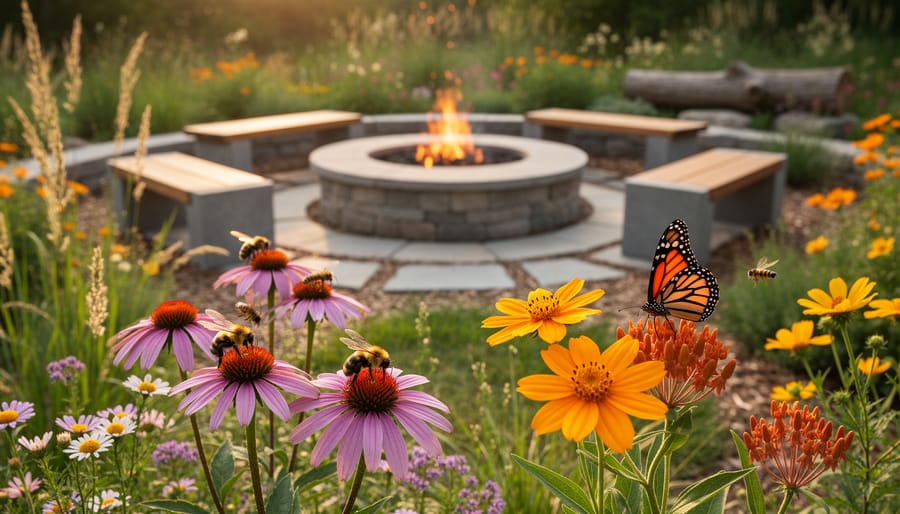
Once your wildlife fire pit garden is in place, the real work begins: watching, learning, and fine-tuning. Give plants at least six to eight weeks to establish before expecting significant wildlife activity. During this time, walk your space weekly with a notebook or phone camera to document what you see.
Start by checking plant health and establishment. New natives should show growth within a month, though some may enter dormancy depending on planting season. Water deeply but infrequently to encourage root growth, and watch for stress signs like wilting or browning despite adequate moisture. Dead or struggling plants signal a mismatch with site conditions, not failure on your part.
Wildlife observation requires patience and timing. Early morning and late afternoon bring the most activity. Look for bees and butterflies on blooms, birds visiting water features or foraging in leaf litter, and evidence like droppings or nibbled leaves. If you’re seeing pollinators on neighbors’ non-native flowers but not yours, your plants may not be blooming yet. Native perennials often focus on root development their first year.
Safety clearances need seasonal checks. Measure from the fire pit edge to the nearest plantings in spring and fall. Fast-growing species can encroach quickly. Trim back anything creeping into the bare zone, and rake up leaf litter that accumulates near the pit.
When results puzzle you or plants underperform, reach out. Extension Master Gardeners offer free consultations and host gardening workshops where you can bring photos and questions. Local chapters often conduct site visits for complex situations. Wildlife habitat creation is iterative, and experienced volunteers love helping troubleshoot alongside you.
Common Questions About Fire Pits and Wildlife
Will the smoke from my fire pit harm birds and other wildlife?
Occasional smoke from a well-managed fire pit won’t cause lasting harm to healthy wildlife. Birds and other animals naturally avoid heavy smoke, and as long as you’re burning clean, dry hardwood (never treated lumber or trash), the brief exposure during your fire sessions isn’t a concern. Position habitat features like birdhouses and feeders at least 30 feet away to give wildlife comfortable distance from active fires.
Can I use fallen branches from my yard as firewood?
You can, but it’s better to leave most fallen branches in place. Dead wood supports hundreds of native insects that feed birds, and a brush pile 20 feet from your fire pit becomes valuable wildlife shelter. If you need the wood, take only what you’ll burn soon and leave the rest scattered in garden beds where beetle larvae, native bees, and salamanders depend on it.
How close is too close for a birdhouse near my fire pit?
Keep birdhouses and nest boxes at least 25 to 30 feet from your fire pit, ideally outside the main sight line so smoke drifts away from them. Birds are sensitive to heat and disturbance during nesting season, and this buffer gives them the quiet, stable environment they need while still letting you enjoy watching them from your seating area.
Will my fire pit scare away pollinators?
Pollinators like bees and butterflies are active during daylight hours when you’re less likely to have a fire burning. They’re attracted to flowers, not fire, so a well-planted habitat with native blooms will draw them in regardless. Evening fires may temporarily displace some moths and nocturnal pollinators, but they’ll return once the fire dies down.
What about nocturnal wildlife like fireflies and moths?
Night-active insects navigate by natural light sources, and a fire pit can temporarily disrupt their behavior similar to porch lights. Limit fire sessions to two or three evenings per week during peak firefly season (late May through July in our region), and keep your habitat plantings dense enough that insects have dark refuges nearby. Turn off competing landscape lights to minimize overall light pollution.
These questions come up repeatedly at Extension Master Gardener clinics, and the common thread is reassuring: you don’t have to choose between enjoying your outdoor space and supporting wildlife. The key is moderation and thoughtful design. Burning a fire once or twice a week during cooler months poses minimal risk to established wildlife populations, especially when you’ve created ample habitat in the surrounding zones.
One concern that doesn’t appear as often but deserves mention is pet safety around wildlife features. If you have dogs or cats that use the yard, position your birdbaths, brush piles, and low nesting areas where pets can’t easily disturb them. A simple border of dense shrubs creates a natural barrier that protects ground-nesting birds and small mammals while still allowing you to observe them from your fire pit seating.
Remember that wildlife adapts to predictable human activity far better than to erratic disturbances. If you use your fire pit regularly on weekend evenings, birds and other animals will learn the pattern and adjust their routines accordingly. What stresses wildlife more is irregular, loud activity or sudden habitat changes. Consistency in how you use your space actually helps wildlife feel secure in the areas you’ve designed for them.
Creating a wildlife-friendly yard around your outdoor fire pit isn’t just possible, it’s a rewarding way to blend personal enjoyment with environmental care. You’ve learned that strategic placement, native plants, and safety zones let you gather around the fire while supporting birds, pollinators, and beneficial insects just steps away.
Start with one or two changes this season. Maybe you’ll add a ring of native groundcovers in your transition zone, or install a birdbath where you can watch from your fire pit seating. Observe what happens. Which plants thrive? What wildlife shows up at dusk? Your yard will teach you what works.
You don’t have to figure this out alone. Extension Master Gardeners in Arlington County and Alexandria City offer free workshops, garden tours, and one-on-one advice tailored to our region. These volunteers share decades of combined experience and love helping neighbors solve real design challenges.
Every time you settle into your fire pit surrounded by thriving habitat, you’re proving these two worlds fit together beautifully. You’re creating something that nourishes both you and the ecosystem around you.