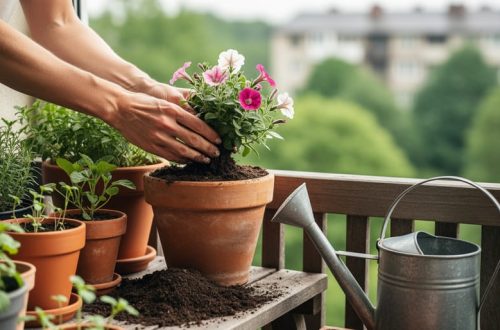
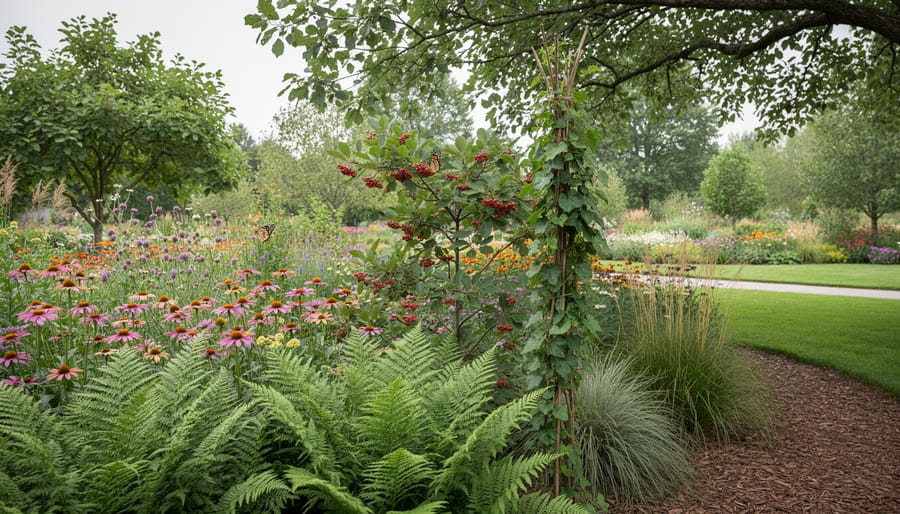
Landscape design in 2027 will shift toward creating layered, biodiverse wildlife habitats using native Canadian plants chosen through careful site assessment. This emerging approach combines what is wildlife gardening with sustainable gardening principles to build resilient outdoor spaces that support birds, pollinators, and beneficial insects while reducing maintenance and eliminating harmful chemicals.
Instead of importing trendy plants that struggle in your yard, you’ll survey your existing conditions first. Soil type, moisture patterns, sun exposure, and elevation determine which native species will thrive without constant intervention. This practical foundation lets you mimic natural plant communities where ferns layer beneath shrubs, vines climb through tree canopies, and grasses anchor the understory.
The most exciting change? Gardens are becoming vertical ecosystems. Varying plant heights creates what experts call layering, where groundcovers, perennials, shrubs, and trees work together to provide shelter, nesting sites, and food sources year-round. This isn’t just beautiful design. It’s functional habitat that brings wildlife back to Canadian yards while cutting your workload. The trends ahead prioritize what works for both nature and the gardener who tends it.
Why 2027 Landscape Trends Focus on Wildlife Habitat
The shift toward wildlife-focused landscape design isn’t just about aesthetics anymore. It’s grounded in a growing body of evidence showing that gardens designed as habitat corridors play a crucial role in supporting declining pollinator populations, providing stopover sites for migratory species, and strengthening urban and suburban ecosystem health. Homeowners across North America are recognizing that their yards, collectively, create a vast network of potential habitat, far larger than protected conservation areas alone.
This recognition has sparked a movement toward evidence-based design principles that prioritize native plant communities, seasonal flowering sequences, and wildlife-friendly soil management. Communities are seeing their green spaces not as isolated decorative plots but as connected corridors where wildlife can forage, nest, and travel safely between larger habitat patches. Extension Master Gardeners and conservation organizations are emphasizing design choices that reduce chemical dependency while increasing biodiversity value.
Programs like the National Wildlife Federation’s Certified Wildlife Habitat® have formalized this trend, offering homeowners a framework for creating gardens that meet specific habitat criteria. These certifications validate the practical impact of wildlife-conscious design decisions, turning backyard landscapes into documented contributions to regional ecosystem health.
How We Identified These Wildlife-Friendly Trends
We didn’t choose these trends based on popularity or passing fads. Each one earned its place here through a rigorous evaluation process grounded in conservation science and proven gardening practices.
Our selection criteria came directly from organizations dedicated to wildlife habitat and sustainable landscaping. We consulted guidance from the Canadian Museum of Nature on native plant gardening principles, reviewed Extension Master Gardener program standards for biodiversity-friendly landscapes, and examined conservation best practices for habitat creation. Every trend had to demonstrate real, measurable benefits for wildlife while remaining practical for home gardeners.
Each trend was evaluated against six essential criteria:
- Direct habitat support for local and migratory species
- Positive biodiversity impact on pollinators and beneficial insects
- Emphasis on native plant use suited to regional conditions
- Reduced chemical dependency through organic methods
- Seasonal flowering value for continuous wildlife support
- Long-term maintenance sustainability for realistic upkeep
Trends that checked all six boxes made the list. Those relying on intensive inputs, exotic species, or short-term appeal didn’t. The result is a collection of design approaches that work with nature rather than against it, creating gardens that truly welcome wildlife home while staying manageable for busy gardeners.
1. Site-Specific Native Plant Selection
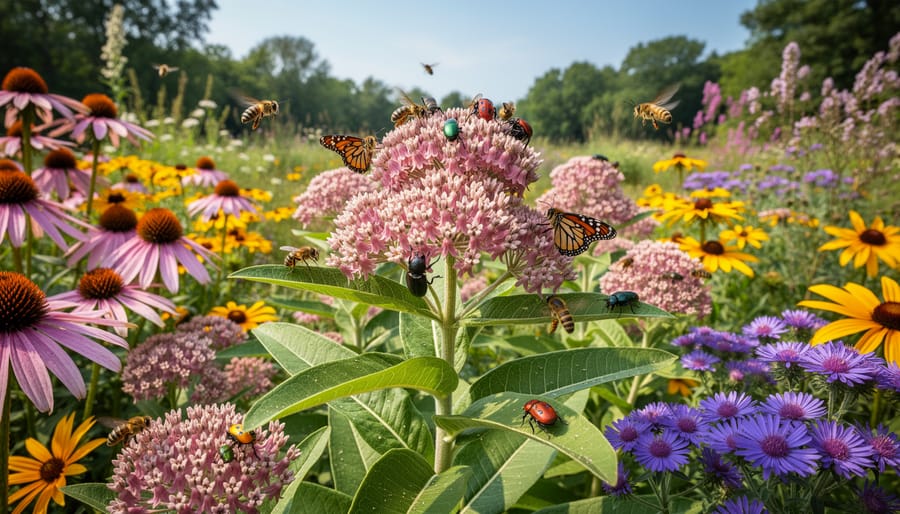
The movement toward site-specific native plant selection represents a fundamental shift in how gardeners approach landscape design. Rather than choosing plants based solely on aesthetics or catalogue appeal, 2027’s most successful wildlife gardens begin with a thorough environmental survey. This means mapping your property’s soil type, drainage patterns, sun and shade zones throughout the day, and elevation changes before selecting a single species. The Canadian Museum of Nature emphasizes this evidence-based approach: survey your garden’s environmental conditions, including soil type, moisture, sun and shade, and elevation, before planting native species.
Equally important is mapping existing structures and any features you plan to add in the near future. This forward-thinking approach prevents costly mistakes like planting a shade-loving species where a new patio will create full sun conditions in two years, or positioning tall plants that will eventually block windows or pathways. One Alexandria Master Gardener volunteer shared how she sketched her backyard’s morning and afternoon sun patterns over a full week before choosing her native plantings, discovering that what appeared to be a sunny border actually received only four hours of direct light due to her neighbour’s garage shadow.
This methodical groundwork pays dividends in plant health and wildlife value. Species suited to your specific conditions establish faster, require less water and maintenance, and provide more reliable food and shelter for local wildlife. Instead of fighting your site’s natural characteristics, you’re working with them to create resilient habitat that thrives year after year.
2. Natural Plant Community Emulation
Stepping into a woodland or meadow reveals nature’s blueprint for resilient plant communities, and 2027’s most compelling landscape design trend brings that same wisdom home. Rather than treating gardens as blank canvases for arbitrary plant arrangements, designers and homeowners are studying the natural ecosystems surrounding their properties and recreating those conditions in their yards.
This approach starts with observation. What plants grow together in nearby forests, prairies, or wetlands? How do they arrange themselves in relation to moisture, shade, and soil? The Canadian Museum of Nature recommends looking to these natural plant communities and emulating their conditions as much as possible for a healthier, more naturalistic garden. When you mirror the plant relationships that evolution has already tested, you create gardens that essentially manage themselves.
The wildlife benefits run deep. Natural plant communities provide the specific structure, food sources, and shelter that local species have adapted to over millennia. A garden modeled after a woodland edge offers the same layered habitat, from leaf litter to canopy, that native insects, birds, and small mammals instinctively seek. These authentic arrangements support complete food webs, not just individual species.
Maintenance drops dramatically because you’re working with nature’s template rather than against it. Plants adapted to similar moisture and light conditions support each other, outcompete weeds naturally, and require minimal fertilizing or watering once established. You spend less time fighting problems and more time watching wildlife thrive in habitat that feels genuinely familiar.
3. Beyond Flowers: Full-Community Planting
Today’s wildlife gardens are breaking free from the “pollinator garden = flower border” mindset. The 2027 trend embraces full-community planting, recognizing that native ecosystems depend on far more than showy blooms. While native pollinator plants remain important, complete habitat requires the structural diversity found in natural landscapes: ferns tucking into shaded corners, sedges anchoring moist edges, grasses swaying in sunny meadows, and woody plants creating the garden’s framework.
The Canadian Museum of Nature identifies the often-neglected plant types that form essential parts of the overall community:
- Ferns: provide dense shelter for ground-dwelling species and salamanders
- Sedges: produce seeds that fuel songbirds through migration and winter
- Grasses: offer nesting material and seed heads that feed finches and sparrows
- Vines: deliver protective cover and berries for birds when allowed to scramble naturally
- Trees: create vital nesting sites and perching structure for dozens of species
- Shrubs: offer year-round shelter and berry crops that sustain wildlife through harsh months
Trees and shrubs deserve special attention in 2027 designs. These woody plants provide irreplaceable wildlife habitat that herbaceous layers simply can’t match. A single mature tree supports cavity-nesting birds, offers safe perching for migrants, and shades the understory species below it.
Native vines are finally getting their due as versatile habitat builders. Used as groundcovers, they knit together the garden floor. Allowed to twine over shrubs and trees, they create excellent wildlife habitat by adding vertical complexity and food sources. This full-spectrum approach mirrors how plants actually grow in nature, and wildlife respond by moving in.
4. Vertical Layering for Habitat Diversity
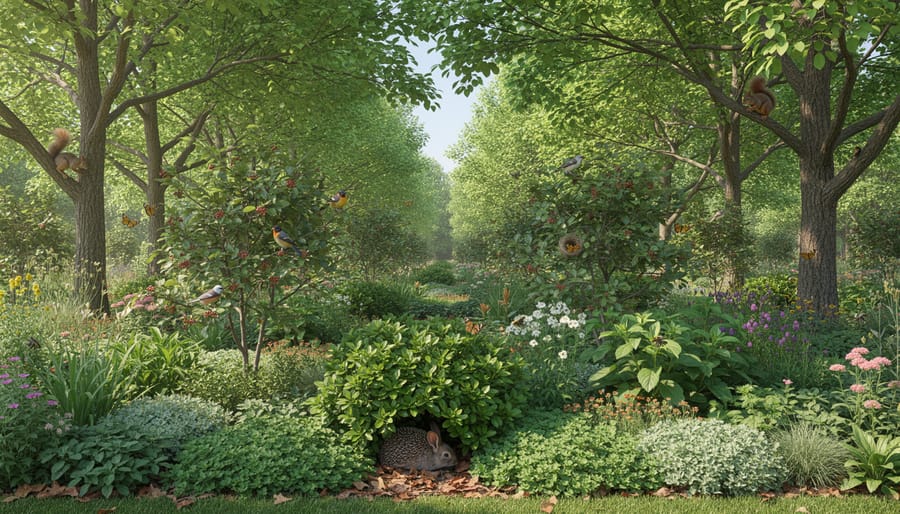
Vertical layering transforms a flat garden into a three-dimensional habitat by intentionally varying plant heights from ground level to canopy. Different wildlife species occupy specific zones: ground-dwelling toads and beetles shelter beneath low groundcovers and fallen leaves, songbirds forage and nest in mid-height shrubs, and canopy-dwelling species like warblers feed among tree branches. By creating these distinct layers, you’re essentially building multiple “rooms” that support far more species than a single-height planting ever could.
The basic framework includes groundcovers and low perennials (0-2 feet), mid-height perennials and small shrubs (2-5 feet), large shrubs (5-10 feet), and trees forming the upper canopy. Native vines add another dimension, they work as groundcovers or twine over shrubs and trees to create vertical habitat without requiring additional footprint. This layering isn’t just aesthetically pleasing; it’s functionally critical for wildlife movement, feeding, and protection from predators.
Small gardens can still achieve meaningful layering. Plant a serviceberry or dogwood as your canopy layer, surround it with native shrubs like elderberry at mid-height, fill gaps with ferns and sedges, and let native grasses anchor the ground layer. Even a 10-foot-wide bed supports vertical diversity when you think upward rather than outward.
Sketch your space in profile view to visualize layers before planting. Mark existing tall features, then plan progressively shorter zones moving toward pathways or lawn edges. This intentional height variation creates the structural complexity that wildlife instinctively seeks, turning your garden into genuine habitat rather than decoration.
5. Chemical-Free Landscape Management
The accelerating shift away from synthetic pesticides and fertilizers represents one of 2027’s most impactful landscape design trends for wildlife. Conventional chemicals kill pollinators, beneficial insects, and soil microorganisms that form the foundation of healthy garden ecosystems. By eliminating these inputs, gardeners create safer habitat where native bees, butterflies, ground beetles, and other wildlife can thrive without exposure to toxic residues.
Transitioning to chemical-free management starts with building healthy soil through organic matter additions and no-till gardening practices that preserve beneficial soil organisms. Community volunteers in Arlington County have found that once native plants establish in appropriate conditions, they naturally resist common pests and diseases without intervention. One Master Gardener volunteer shared how her front yard transformation from turf to native wildflowers eliminated her fertilizer costs entirely while attracting dozens more butterfly species.
The organic approach extends beyond pest control to include natural fertilization through composting, mulching with shredded leaves, and allowing plant debris to decompose in place. This creates nutrient cycling that feeds soil life rather than bypassing it with synthetic inputs. When pest issues do arise, chemical-free gardeners rely on physical removal, targeted organic solutions, or simply accepting minor cosmetic damage as part of a functioning ecosystem. The payoff comes in vibrant pollinator populations, healthier soil structure, and gardens that genuinely support wildlife at every level.
6. Season-Long Bloom Sequences
Planning gardens that bloom continuously from March through November isn’t just aesthetically pleasing, it’s essential wildlife support. In 2027, more gardeners are mapping bloom sequences to ensure nectar and pollen availability throughout the growing season, particularly during critical migration periods and early spring emergence.
Early-season native plants like wild columbine and Virginia bluebells provide crucial fuel for bees emerging from winter dormancy and arriving hummingbirds. Mid-season bloomers such as bergamot and coneflowers sustain pollinators during peak summer activity. Late-flowering species like asters and goldenrods offer vital energy reserves for monarch butterflies preparing for migration and bumblebee queens establishing winter nests.
Start by listing native plants suitable for your garden conditions, then note their bloom periods. Aim for at least three species flowering in each season. Spring requires particular attention since many pollinators depend on early nectar sources after months without food.
Consider bloom duration alongside timing. Some species flower for weeks while others fade quickly. Overlapping several mid-length bloomers creates more reliable coverage than relying on a few marathon flowers. Group plants with similar bloom times together for visual impact and pollinator efficiency, insects expend less energy when abundant flowers cluster in one area.
Community gardeners report success using simple calendars to track existing bloom gaps, then selecting new additions specifically to fill those periods. Extension Master Gardeners can recommend regionally appropriate natives with complementary flowering schedules tailored to your local wildlife community.
7. Low-Maintenance Wildlife Corridors
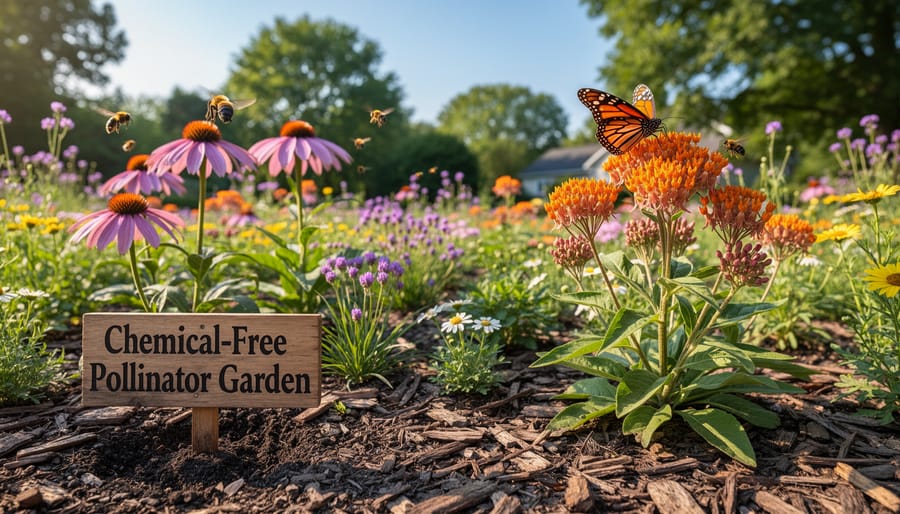
Wildlife corridors are emerging as one of 2027’s most practical landscape design trends, transforming how we think about garden connectivity and maintenance. These intentional pathways link fragmented habitat patches across neighbourhoods, allowing wildlife to move safely between feeding, nesting, and shelter areas while demanding far less upkeep than traditional landscape approaches.
The corridor concept works because it relies on native plant communities already adapted to your region’s rainfall patterns, soil chemistry, and temperature swings. When you select species matched to local conditions, you eliminate the constant watering, fertilizing, and fussing that non-native ornamentals demand. A corridor designed with native ferns, sedges, and groundcovers establishes quickly, spreads naturally, and thrives on benign neglect once root systems develop.
Smart corridor design reduces maintenance through these strategies:
- Group plants by water needs so you irrigate only high-use zones during establishment
- Use native groundcovers to suppress weeds and eliminate mulching tasks
- Allow natural leaf litter to accumulate for wildlife shelter and soil health instead of constant raking
Arlington County community gardeners have documented success with corridor plantings that connect parkland to residential yards. One neighbourhood project created a shaded pathway using native woodland species that required watering only during the first growing season. By the second year, the corridor maintained itself through rainfall alone while supporting songbirds, small mammals, and pollinator traffic between green spaces.
Alexandria City’s Arlandria community garden demonstrates how corridors work in urban settings. Volunteers planted native vines to twine over existing fences and shrubs, creating vertical habitat connections without claiming additional ground space. The vines established rapidly, needed zero fertilizer, and now provide year-round cover for migrating birds with minimal pruning.
Bringing These Trends to Your Garden
Starting with wildlife-friendly landscaping feels more manageable when you focus on one or two trends at a time rather than overhauling your entire garden at once. Begin by surveying your garden’s environmental conditions, soil type, moisture levels, sun and shade patterns, and elevation, as this foundation guides every decision that follows. Map existing structures and any features you plan to add in the near future so your native plant choices fit seamlessly into the overall design.
Which trend should I start with?
Begin with site-specific native plant selection by surveying your garden conditions before purchasing plants. This ensures species will thrive in your specific environment and reduces maintenance while supporting local wildlife.
Where can I find native plants suited to my area?
Contact your local Extension Master Gardener program or native plant society for region-specific recommendations and nursery referrals. Many conservation organizations also maintain lists of plants native to your province or territory.
How long before wildlife arrives?
Pollinators typically visit within days of planting flowering natives, while birds and other wildlife may take several seasons as your plant community matures and develops the layered habitat structure they need.
Can I incorporate these trends into an existing garden?
Absolutely, most gardeners transition gradually by replacing non-natives as they decline, adding vertical layers to existing beds, or converting one section at a time to wildlife-friendly design.
How do I learn more about local wildlife needs?
Extension Master Gardener programs offer workshops, plant clinics, and personalized guidance on creating habitat that supports your region’s specific wildlife, pollinators, and migratory species.
Working with your existing landscape means you can phase these trends in gradually rather than starting from scratch. Look to natural plant communities in nearby parks or conservation areas and try to emulate their conditions as much as possible for a healthier, more naturalistic garden. Remember that ferns, sedges, grasses, vines, trees, and shrubs are often neglected but form essential parts of the overall plant community. Trees and shrubs provide critical habitat for wildlife, while native vines can serve as groundcovers or twine over existing structures for excellent vertical habitat.
The wildlife-friendly landscape trends shaping 2027 represent far more than aesthetic choices. These practices acknowledge that every garden, no matter how small, functions as potential habitat in an increasingly fragmented landscape. By choosing native plants suited to your specific conditions, layering vegetation vertically, and eliminating harmful chemicals, you create living corridors that support pollinators, songbirds, beneficial insects, and countless other species that depend on healthy ecosystems.
What makes this shift especially promising is how accessible these practices are. You don’t need specialized training or expensive materials to survey your site conditions, select regionally appropriate natives, or reduce pesticide use. Starting with even a single native tree or transitioning one bed to chemical-free management makes a tangible difference.
Your local Extension Master Gardener program offers expert guidance tailored to your region’s plants and growing conditions. Community wildlife gardening groups provide practical support and shared learning as you implement these trends. When neighbours across a street, block, or watershed adopt similar habitat-focused approaches, individual gardens link into meaningful wildlife corridors.
Your landscape choices ripple outward, contributing to biodiversity one planting decision at a time.