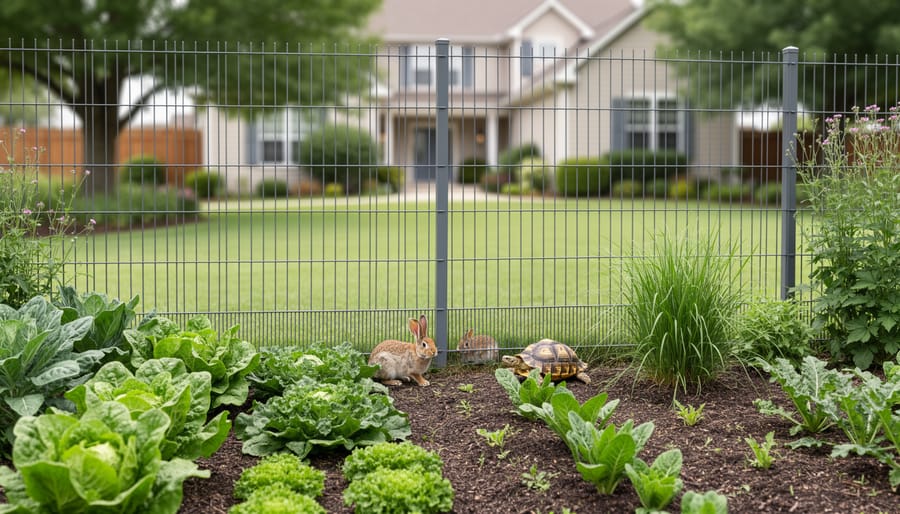
Wildlife friendly fencing protects your garden from browsing animals while allowing smaller creatures like turtles, rabbits, and ground-nesting birds to pass safely through or under it. The solution lies in choosing the right fence height, mesh size, and installation technique to create selective barriers that keep out deer and larger wildlife while preserving natural corridors for beneficial species.
Most Arlington County and Alexandria City gardeners struggle with this balance. Traditional fences often block crucial pathways that local fauna depend on for foraging, breeding, and shelter. A poorly designed barrier can fragment wildlife habitat, isolate populations, and disrupt the very ecosystem your garden supports.
The good news? Installing wildlife friendly fencing isn’t complicated or expensive. You’ll spend about four to six hours on a typical residential garden perimeter, and the approach works beautifully whether you’re protecting vegetable beds, ornamental plantings, or native plant gardens.
The key is understanding what you’re managing. Deer require at least seven to eight feet of height to deter jumping, but you can leave a 12-inch gap at ground level for smaller mammals and amphibians. Wire mesh with four-inch openings keeps rabbits out while letting box turtles through. Avoid barbed wire entirely, and skip the solid bottom boards that act as impassable walls.
Community volunteers across our region have proven this approach works. Sarah Martinez in Arlington Forest reports zero deer damage to her heirloom tomatoes while regularly spotting rabbits and chipmunks moving through her garden’s lower fence gaps. That’s the kind of practical coexistence we’re aiming for.
Understanding Wildlife Friendly Fencing
Wildlife friendly fencing works on a simple but powerful principle: your garden boundaries can protect your plants while still allowing animals to move safely through their natural territories. Unlike traditional fencing that creates solid barriers, this approach treats your property as part of a larger ecosystem where deer, foxes, rabbits, and birds all play important roles. By understanding a few key design elements, you can create fencing that serves both your needs and theirs.
The first principle is visibility. Birds need to see fencing to avoid collision injuries, which means choosing materials that stand out against your landscape or adding markers that catch their attention. The second is appropriate spacing, your fence should allow small mammals like rabbits and groundhogs to pass underneath (typically 12-16 inches of clearance at ground level) while still deterring them from your vegetable beds through other means. The third is safe height and smooth construction. A 42-48 inch fence provides reasonable garden protection without forcing deer to attempt dangerous jumps, and avoiding barbed wire prevents injuries to animals that do cross.
These design choices work alongside other habitat features in your garden to support local biodiversity. Sarah Martinez, an Arlington County gardener, made the switch three years ago after finding an injured rabbit tangled in her old wire fence. She replaced it with a smooth, visible design and now watches foxes pass safely beneath while her raised beds remain protected. Her garden has become a popular rest stop for migrating birds, and she has not lost the vegetable harvest she was worried about.
Tools and Materials You’ll Need
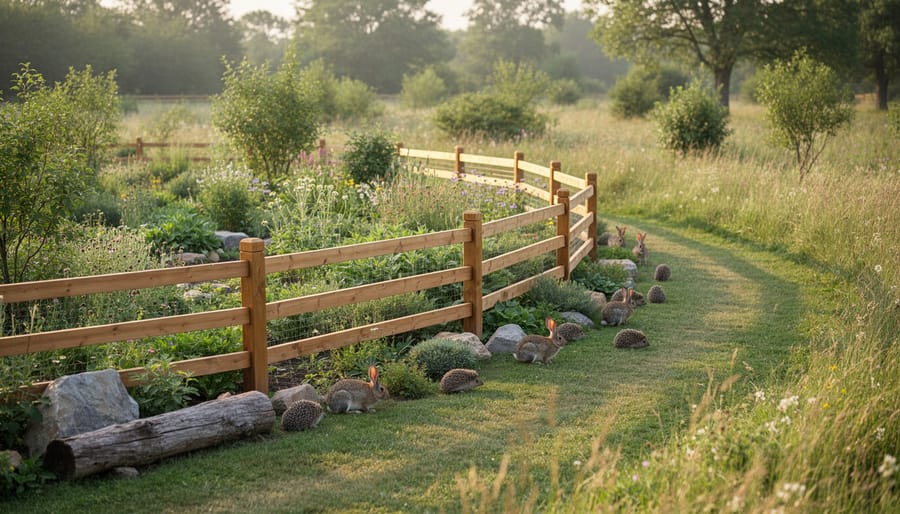
Gathering the right tools and materials before you begin makes installing wildlife friendly fencing smoother and safer. Having everything on hand prevents mid-project trips to the hardware store and helps you maintain momentum through each installation phase.
Essential Tools
- Post hole digger (manual or power auger) for digging holes one-third the height of your posts
- Level to ensure posts stand perfectly vertical and horizontal rails align properly
- Measuring tape (at least 25 feet) for marking post locations and checking spacing
- Wire cutters or fence pliers for trimming and shaping fencing material
- Hammer or cordless drill with appropriate bits for securing brackets and fasteners
- String line and stakes to mark your fence layout before digging
- Wheelbarrow for moving soil, gravel, and materials around your property
Required Materials
You’ll need rot-resistant fence posts (cedar, locust, or recycled composite materials work well), spaced six to eight feet apart depending on your chosen fencing style. For the fencing itself, select materials with visibility and appropriate spacing: welded wire mesh, vinyl-coated wire, or smooth wooden rails all qualify as wildlife-safe options when installed correctly.
Visibility markers prevent bird collisions, look for reflective tape, wooden slats painted in contrasting colors, or recycled plastic markers that attach easily to wire. Don’t forget concrete or gravel for stabilizing posts, galvanized screws or nails that resist rust, and gate hardware if you’re including access points.
Consider sustainable choices where possible. Reclaimed wood posts reduce environmental impact, and locally-sourced materials support your community while cutting transportation emissions. Many Arlington County gardeners find success with recycled vinyl fencing that mimics natural aesthetics while offering decades of durability without chemical treatments.
Safety Considerations Before You Start
Before breaking ground on your wildlife friendly fencing project, take time to address several critical safety considerations that protect both you and the local ecosystem.
Start by contacting Virginia 811 to mark underground gas lines, electrical cables, water pipes, and communication lines on your property. This free service prevents potentially deadly strikes and costly repairs. While waiting for utility marking, review your local jurisdiction’s zoning codes, Arlington County and Alexandria City have specific setback requirements and height restrictions that vary by neighborhood and property type.
Never attempt to install fence posts alone. Heavy posts require a partner to hold them level while you fill and tamp the holes, preventing back injuries and ensuring straight installation. Wear leather or heavy-duty work gloves to protect against splinters, sharp wire ends, and metal edges. Safety glasses are essential when cutting wire or driving posts, as metal fragments and wood chips can cause serious eye injuries.
Pay attention to wildlife activity patterns during your installation timeline. Avoid disturbing active nests during spring breeding season, and schedule noisy work for midday when animals are less active. If you encounter wildlife during installation, give animals space to leave the area safely rather than continuing work. Keep your workspace organized with tools secured and materials stacked properly to prevent trips and falls, especially when working near post holes or uneven ground.
Step-by-Step Installation Process
Planning Your Fence Layout
Start by walking your property boundaries with a notebook and camera during early morning or dusk when wildlife is most active. These observations will reveal natural movement paths, look for worn trails through vegetation, gaps under existing structures, or areas where animals cross between properties. Extension Master Gardeners recommend spending several days noting tracks, droppings, and disturbed vegetation to map these corridors before placing a single post.
Once you’ve identified wildlife routes, sketch your fence line to accommodate rather than block them. Plan for 12 to 16 inches of clearance at ground level to allow rabbits, groundhogs, and other small mammals safe passage. For height, aim for 42 to 48 inches, tall enough to discourage deer browsing but low enough that larger animals can leap over if needed. Research on wildlife-minded fence heights confirms this range balances garden protection with animal safety.
Mark your post locations with stakes and string, spacing them six to eight feet apart for stability. Position corner posts first, then measure evenly along straight runs. Where your fence must cross a wildlife corridor, consider leaving a slightly wider gap between posts or installing a simple hinged section that can swing open seasonally. Double-check that your layout respects property lines and any local setback requirements before digging begins.
Installing Posts and Framework
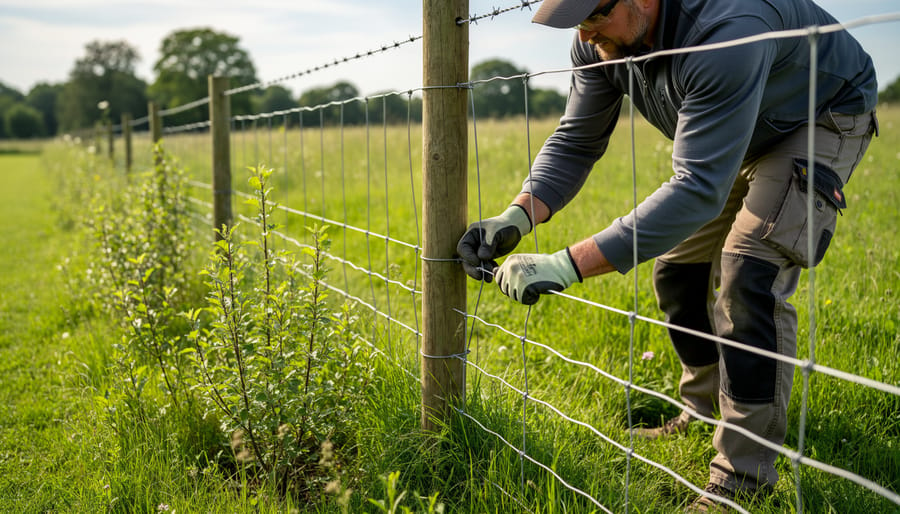
Start by digging post holes that are one-third the height of your fence posts. For a standard 6-foot post supporting a 4-foot wildlife-friendly fence, you’ll dig about 2 feet deep. Use a post hole digger or auger to create holes 8-10 inches in diameter, spacing them 6-8 feet apart along your planned fence line.
Before setting posts, add 4 inches of gravel to each hole for drainage. This prevents rot and extends your fence’s lifespan. Position the first corner post vertically in its hole, then use a level to check both directions, you want it perfectly straight. A crooked post now means a wobbly fence later.
Backfill around the post with soil, tamping firmly every few inches. Pack it tight enough that the post doesn’t wiggle when you push it. Many Arlington County gardeners mix concrete for corner and gate posts where extra stability matters, but tamped soil works fine for line posts in most yards.
Once corner posts are secure, run a string line between them at the height where your top rail will sit. This guides placement of remaining posts and keeps your fence line true. Set each intermediate post using the same dig-level-tamp process, checking that the tops align with your string.
After all posts cure for 24 hours, install horizontal rails or wire supports. Space rails 12-16 inches apart to prevent animals from squeezing through while maintaining visibility. Secure them with galvanized screws or fencing staples, keeping all hardware smooth and free of sharp edges that might injure wildlife.
Attaching Wildlife-Safe Fencing Material
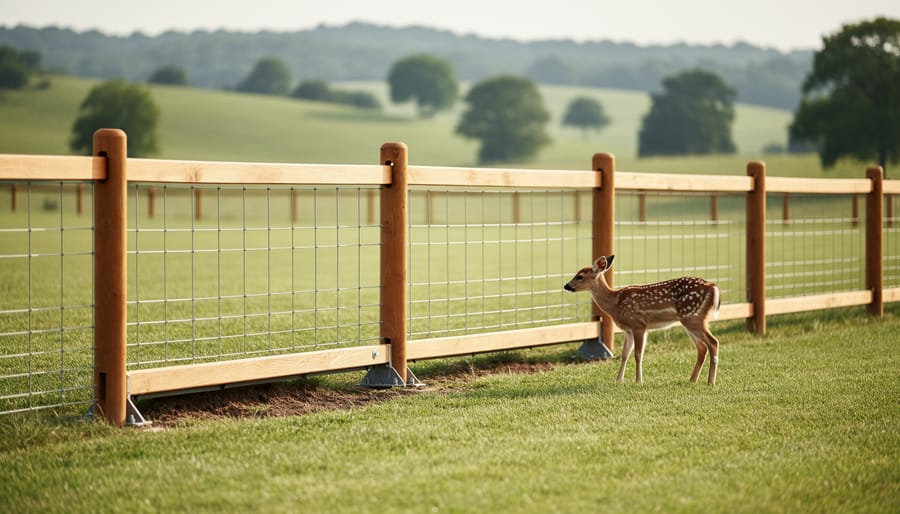
With your posts secure and level, you’re ready to attach the fencing material, the most critical step for protecting both your garden and local wildlife.
Start by choosing wildlife-safe fencing. Skip barbed wire entirely, especially on top strands where deer and other animals can suffer serious injuries. Instead, opt for smooth wire, welded wire mesh, or wooden rails. If using wire mesh, select openings no larger than 2×4 inches to keep groundhogs and rabbits out while preventing fawns or foxes from getting their legs caught.
Measure 12 to 16 inches from ground level and mark this clearance on each post. This gap allows rabbits, possums, and other small mammals to pass underneath without forcing them to climb or squeeze through dangerous spots. Arlington County Extension Master Gardeners note that this bottom clearance reduces fence-related injuries by nearly 80 percent compared to flush-to-ground installations.
Secure your fencing material to posts using galvanized staples or fence clips, working from one end to the other. Keep wire taut but not overly tight, some flex prevents animals from bouncing off and getting hurt. Avoid creating sharp wire ends. Bend any cut edges into smooth loops or cap them with protective sleeves.
For areas where deer regularly cross, create deliberate “escape routes” by leaving the top rail removable or installing a simple wooden gate that swings open under pressure. If using nearly-invisible wire, attach white or reflective flagging tape every six feet at deer eye-level so animals see the barrier before collision.
Adding Visibility Features
Even the most carefully spaced wildlife friendly fencing can become a collision hazard if birds can’t see it clearly. Adding visibility features protects flying animals while keeping your fence attractive and functional.
Start with simple visibility markers spaced every three feet along the top rail. White or brightly colored strips of weather-resistant fabric work well, as do commercially available bird diverters. Reflective tape catches sunlight and movement, making the barrier obvious to approaching wildlife. For a natural look, weave contrasting-colored twine or cord through the mesh in a gentle wave pattern, the visual break helps birds recognize the structure.
Plant native shrubs like winterberry holly or American beautyberry about two feet from the fence line. These create a natural buffer that signals the boundary to wildlife while attracting beneficial insects and birds to your garden. As plants mature, they soften the fence’s appearance and provide food sources for local species.
Check your visibility features monthly, especially after heavy weather. Fabric strips fade and tear, reflective tape loses its shine, and plantings may need pruning. Fresh markers maintain effectiveness through seasons while your wildlife friendly fencing continues serving both protection and conservation goals.
Verification and Monitoring Your Fence
Once your fence is installed, a thorough inspection ensures it protects your garden while keeping wildlife safe. Walk the entire perimeter and run your gloved hand along all wire edges, checking for sharp points or loose ends that could injure animals. Test wire tension by pressing gently, it should be taut enough to deter browsing but have slight give to prevent injury if an animal pushes against it.
Measure bottom clearances at multiple points to confirm the 12-16 inch gap remains consistent, even where ground slopes. Check for gaps between posts where small animals might squeeze through and become trapped. Look overhead for any sagging wires or weak attachments that could create entanglement hazards for climbing animals or birds.
During the first two to four weeks, observe your fence at dawn and dusk when wildlife is most active. Good signs include small mammals passing underneath without hesitation, deer browsing outside the fence line rather than attempting to jump, and an absence of caught fur, feathers, or collision marks. If you notice animals pacing along the fence or attempting risky jumps, you may need to adjust visibility markers or create clearer passage routes.
Document any concerning animal behavior or damage patterns. Torn wire, bent posts, or accumulated fur suggest animals are struggling to navigate safely. Address these issues promptly by adding escape routes, reinforcing weak sections, or consulting Extension Master Gardeners for site-specific solutions. Regular monitoring during the first month establishes whether your wildlife friendly fencing achieves the balance between garden protection and animal safety.
Maintaining Your Wildlife Friendly Fence
Regular maintenance keeps your wildlife friendly fencing effective and safe for years. Inspect your fence after severe weather, storms can loosen posts, create sharp edges, or introduce debris that poses entanglement risks. Check wire tension monthly and tighten any sagging sections that animals might push through or get caught in.
Clear vegetation growing along the fence line that could create hidden hazards or block small animal passages underneath. Trim back thorny plants or dense growth that might channel wildlife into dangerous spots, but leave some native plantings for habitat, they work together with wildlife-friendly soil to support beneficial insects and pollinators.
Replace faded visibility markers every spring so birds can see the barrier clearly. UV exposure and weather wear them down faster than you’d expect. Reinforce weak sections before they fail completely, a wobbly post or loose wire becomes a safety hazard quickly.
Keep a simple maintenance log noting repairs and wildlife observations. Arlington County gardeners find that seasonal walk-throughs, especially in March and October, catch most problems early when they’re cheap and easy to fix.
Common Questions About Wildlife Friendly Fencing
How much more does wildlife friendly fencing cost compared to traditional options?
Wildlife friendly fencing typically costs about the same as standard fencing, sometimes even less since you’re avoiding expensive barbed wire top strands. Your main investment is thoughtful design rather than specialized materials.
Will wildlife friendly fencing actually protect my garden from deer and rabbits?
Yes, when properly installed at 42-48 inches with appropriate spacing, these fences effectively deter deer from jumping while the lower clearance allows rabbits and other small mammals to pass through safely rather than getting trapped inside your garden. The key is correct height and visibility features that guide animals around rather than through your planted areas.
Which local animals benefit most from wildlife friendly fencing?
In Arlington County and Alexandria City, rabbits, foxes, groundhogs, opossums, and various bird species all benefit from properly designed fencing. These animals need safe passage through suburban areas to reach food sources, shelter, and mates without getting injured or trapped.
Can I modify my existing fence to make it more wildlife friendly?
Absolutely. Remove barbed wire top strands, add visibility markers to prevent bird collisions, and create 12-16 inch clearance at the bottom by raising lower sections or cutting gaps at property edges where wildlife corridors exist.
These questions come up regularly at Master Gardener workshops throughout our community. Extension Master Gardeners offer free consultations to help you assess your specific property and fencing needs. You can find them at local farmers markets, through the Virginia Cooperative Extension office, or at monthly “Ask a Master Gardener” sessions held at Arlington Central Library. They’ve helped hundreds of local gardeners balance wildlife protection with beautiful, productive gardens.
Many Arlington County residents have also connected through neighborhood Facebook groups and to share their wildlife friendly fencing experiences, photos of successful installations, and tips for local conditions. These community connections provide real-world insights about what works in our specific area.
Installing wildlife friendly fencing is more than a weekend project, it’s a meaningful step toward creating harmony between your gardening goals and the natural world around you. By choosing materials and designs that protect both your plants and local animals, you’re joining a growing community of gardeners who recognize that our yards are part of a larger ecosystem.
The knowledge you’ve gained here opens doors to even more wildlife-supportive practices. Consider exploring container gardening to extend your habitat work to patios and balconies, or attend local workshops through the Extension Master Gardener program to deepen your understanding of sustainable landscaping.
We’d love to hear about your fencing project and what wildlife you’re observing in your garden. Share your experiences at community gardening events, volunteer with habitat restoration efforts in Arlington County and Alexandria City, or simply pass along what you’ve learned to a neighbor considering their own fence. Every wildlife-friendly choice creates ripples of positive change throughout our shared environment.