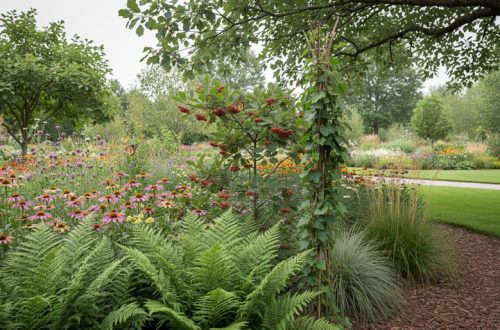
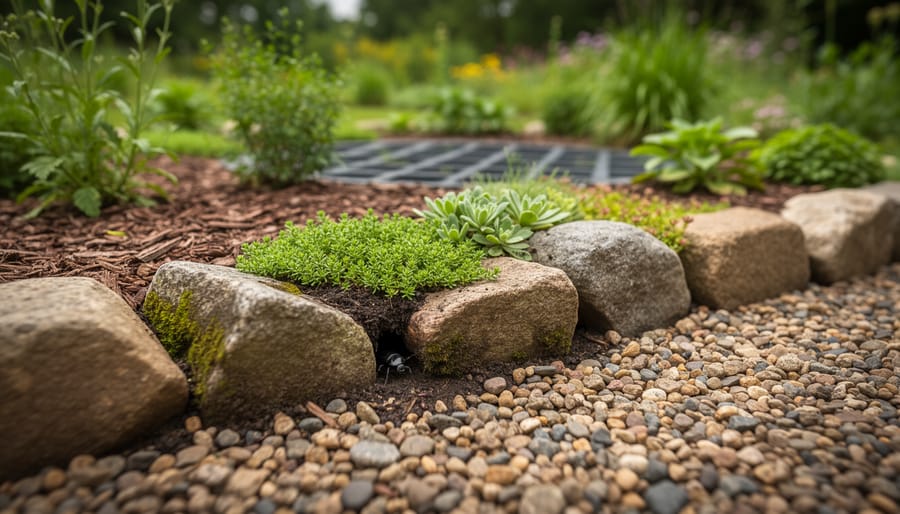
Stones transform ordinary gardens into wildlife havens while solving practical problems like erosion, weeds, and muddy pathways. Gardeners across North America are discovering that the right rocks do more than beautify, they create essential habitat for ground beetles, salamanders, and native bees that nest in gaps between stones.
Start by selecting stones that match your garden’s purpose and your local ecosystem. Flat flagstones work beautifully for pathways where you want solid footing, while river rocks in various sizes create naturalistic borders that small creatures can shelter beneath. Angular crushed granite or limestone chips excel at suppressing weeds around raised beds, but smooth pea gravel allows better water penetration for rain gardens. Visit local stone yards rather than big-box stores to find regionally sourced materials that blend naturally with your landscape and support nearby businesses. Expect to pay $40 to $90 per ton for bulk decorative stone in 2026, with delivery adding another $50 to $150 depending on distance.
The secret most landscapers won’t tell you: leaving irregular gaps between stones creates the micro-habitats that beneficial insects desperately need. Sarah Chen, a community garden coordinator in Portland, watched her pest problems decline by half after installing a stone border with deliberate crevices where ground beetles could hunt aphids at night.
Choose permeable options whenever possible. Solid stone patios look stunning but they shed rainwater like pavement, contributing to runoff problems. Spacing flagstones with low-growing thyme or sedum between them lets water soak in while adding fragrance and pollinator food.
What Gardening Stones Bring to Your Outdoor Space
Gardening stones deliver a surprisingly long list of benefits that go well beyond curb appeal. When you incorporate stones thoughtfully, you’re setting up a low-maintenance foundation that conserves water, discourages weeds, and creates microhabitats for creatures that keep your garden healthy.
Stone mulch offers practical advantages that align with sustainable gardening principles. Research confirms that mulch reduces evaporative loss from soil, meaning you’ll water less frequently during dry spells. University studies also show that mulch suppresses weeds by blocking light that triggers germination, saving you hours of pulling unwanted plants. Stone’s thermal mass helps too. Experts note that mulch helps regulate temperature by moderating soil heat swings, protecting roots from stress.
From a wildlife perspective, stones create habitat niches that organic mulch alone can’t match:
- Gaps between stones shelter ground beetles, spiders, and other beneficial predators that control pest populations.
- Sun-warmed rocks provide basking spots for amphibians and reptiles that need warmth to hunt effectively.
- Stone borders and piles offer refuge for small mammals, toads, and native bees that nest in soil.
- Porous stone surfaces allow rainwater to infiltrate slowly, supporting soil organisms and reducing runoff.
These features complement xeriscaping tips that emphasize working with natural systems rather than fighting them. Whether you’re covering a pathway with larger stones or adding an 18 kg bag of pea stone around perennials, you’re building structure that lasts years while supporting the web of life beneath your plants.
Choosing the Right Stones for Different Garden Areas
Pathways and High-Traffic Areas
High-traffic pathways need stones that can handle constant use without shifting underfoot or creating muddy patches when it rains. Crushed stone or gravel in the 10-20mm range works well because pieces lock together under foot traffic while still letting rainwater permeate into the soil below. This prevents puddles and runoff, two problems that plague solid paving.
For a more formal look, flagstones set with gravel joints provide stable footing and wildlife-friendly gaps where ground beetles and other beneficial insects find shelter. Space flagstones about 50-75mm apart, then fill the joints with smaller pea stone. The combination gives you durability where people walk regularly while keeping the path breathable.
Skip smooth river rock for pathways. Those rounded stones roll and shift, creating an unstable surface that’s frustrating to navigate with a wheelbarrow or garden cart. Angular stones stay put better and create the firm footing that Extension Master Gardeners recommend for accessible garden routes. You’ll use less material over time because you won’t need to top up areas where stones have migrated into planting beds.
Garden Beds and Around Plants
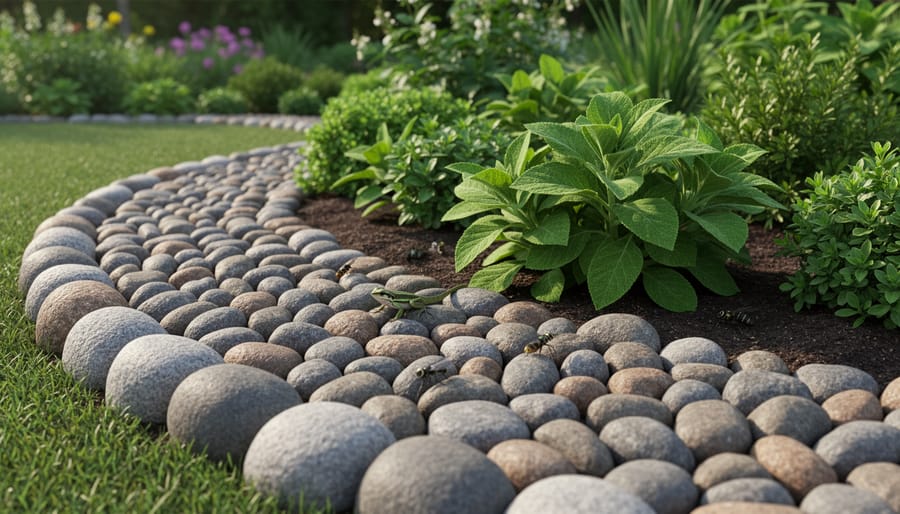
Small stones work beautifully around perennials, shrubs, and in flower beds where you want a finished look that also helps the soil stay healthier. Pea stone, typically smooth rounded pebbles about pea-sized, is a popular choice because it allows water to filter through to plant roots while reducing evaporation from the soil surface. This moisture retention benefit matters especially during hot summers when every bit of water conservation counts.
When choosing stone size for beds, consider your plants’ needs. Smaller stones like pea gravel settle nicely around stems and create a tidy appearance, but they’re light enough that birds and squirrels sometimes scatter them while foraging. Slightly larger decorative stones, up to 2-3 cm across, stay put better and still allow beneficial ground beetles and small creatures to navigate between them. Layer stones about 5 cm deep over landscape fabric or directly on prepared soil, leaving a small gap around plant stems to prevent moisture buildup against bark. This approach supports healthier plants while creating tiny refuges for the insects that keep your garden ecosystem balanced.
Water Features and Drainage Solutions
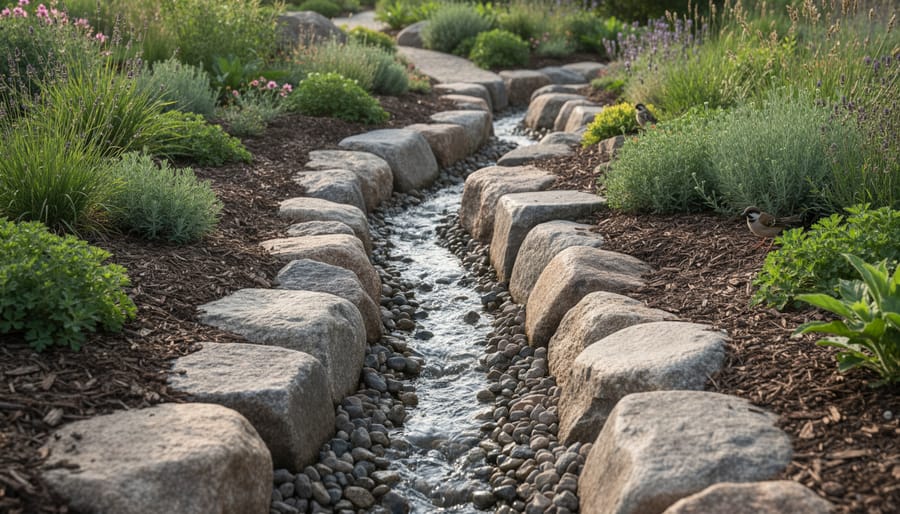
Stones excel at managing rainwater while creating habitat edges that wildlife depend on. Larger river rocks and rounded boulders placed along rain garden margins slow runoff, allowing water to percolate into the soil rather than eroding bare earth. This natural filtration benefits both your garden and local waterways.
For pond or birdbath edges, arrange flat stones in irregular patterns rather than rigid lines. These create shallow ramps where butterflies, bees, and small mammals can safely access water. Gaps between stones offer refuge for ground beetles and salamanders that hunt garden pests.
On slopes prone to erosion, layering stones of varying sizes creates a stable surface that still allows moisture through. Position larger anchor stones first, then fill gaps with smaller decorative stones like pea stone to lock everything in place while preserving drainage channels.
The key is mimicking natural streambeds: uneven spacing, mixed sizes, and deliberate pockets where water can pool briefly before continuing downward. This approach controls erosion without concrete or plastic barriers, and it transforms functional drainage areas into wildlife corridors that connect different parts of your garden ecosystem.
Installing Stones the Wildlife-Friendly Way
The key to successful stone installation lies in working with nature rather than against it. Unlike conventional landscaping that scrapes away topsoil and disrupts entire ecosystems, a wildlife-friendly approach protects the beneficial organisms already living in your garden while creating new habitat opportunities.
Start by observing your chosen area for a few days. Watch where ground-nesting bees emerge, note active ant colonies, and identify any salamander hiding spots under logs or leaf litter. These creatures are your garden’s workforce, and they deserve consideration during your project.
When you’re ready to begin, follow these steps to install stones while preserving soil health and wildlife habitat:
- Mark your stone area with stakes and string, but don’t excavate immediately. Walk the perimeter and relocate any visible invertebrates, egg clusters, or active nests to similar nearby habitat.
- Clear only the top layer of vegetation by hand-pulling or cutting at ground level. This mimics no till gardening principles that keep soil structure intact and preserve underground tunnel systems used by beetles, earthworms, and beneficial nematodes.
- Lay down a water-permeable landscape fabric if needed for weed suppression, but avoid thick plastic barriers that suffocate soil life and prevent water infiltration.
- Spread stones in a 2 to 3 inch layer, working from one end to the other rather than dumping entire bags in piles. This gentler approach gives ground-dwelling creatures time to move.
- Leave intentional gaps and slightly thinner areas where stones are spread at 1.5 inches. These create cool microclimates and access points for small wildlife.
- Tuck larger stones (fist-sized or bigger) along edges and create small clusters within the main stone area to serve as shelter for amphibians and overwintering insects.
The loose-laid method works best for wildlife gardens. Avoid tamping stones down hard or using cement, which eliminates the air pockets and crevices that beneficial insects need. Those seemingly empty spaces between stones become hunting grounds for predatory beetles that control pest populations and refuges for native bees during temperature extremes.
Water your new stone feature lightly after installation. This settles everything naturally and helps any disturbed organisms reorient themselves. Within weeks, you’ll notice life returning as ground beetles patrol the edges, spiders spin webs between larger stones, and moss begins colonizing shaded surfaces. That’s exactly what you want in a thriving wildlife garden.
Creating Habitat Features with Stones
Strategic stone placement transforms your garden into a sanctuary for beneficial creatures. Beyond decorating paths and beds, stones create essential microhabitats that support the same ecosystem goals as your native pollinator plants.
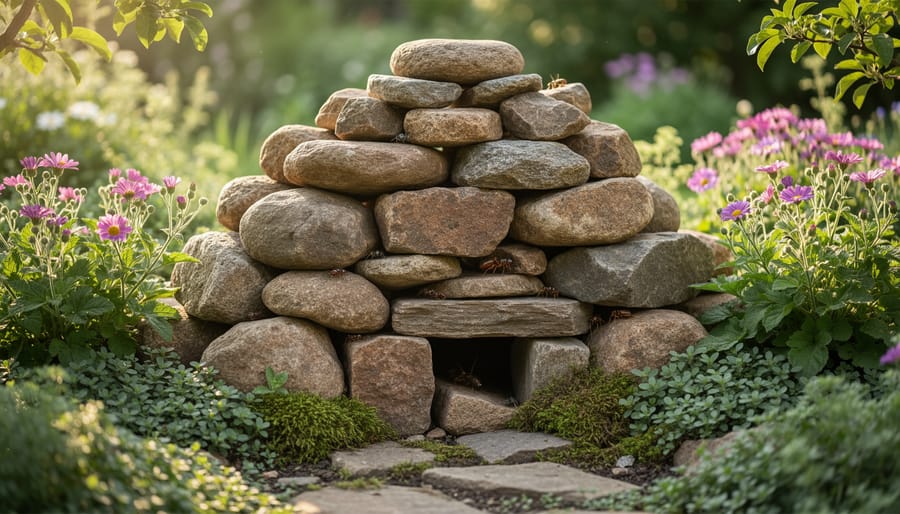
A simple rock pile in a sunny corner becomes prime real estate for ground-nesting bees and solitary wasps. These pollinators seek out crevices between stones for nesting sites, often returning to the same spot year after year. Stack fist-sized rocks loosely rather than cementing them together. The gaps matter, they give beneficial insects shelter from predators and harsh weather while providing south-facing warmth that speeds larval development.
For salamanders and ground beetles, create stone refuges in shadier, moister spots. Position flat rocks directly on soil, leaving one edge slightly elevated with a smaller stone underneath. This creates a cool, humid chamber where these creatures hide during the day and emerge at night to hunt slugs and other garden pests.
Stone borders around garden beds serve double duty. They define your planting areas while offering dozens of small gaps where spiders, centipedes, and other predatory arthropods shelter between hunting trips. When arranging decorative stones along bed edges, resist the urge to fit them tightly together. Those irregular spaces between rocks become part of your wildlife garden features providing hunting blinds and travel corridors.
Place a few larger stones among low-growing plants too. Butterflies and native bees land on sun-warmed rocks to regulate body temperature before flying. On cool spring mornings, watch these stones become gathering spots where pollinators bask before starting their day.
Maintenance and Seasonal Considerations
Stone features require minimal upkeep, but regular attention keeps them functional and wildlife-friendly year-round. Spring calls for a gentle rake-through to redistribute stones displaced by frost heaving, particularly in pathways and around garden beds. Check for settled areas and add a thin top layer where needed, which maintains consistent coverage without disturbing beneficial insects that overwinter beneath.
Weed management matters most in the growing season. Hand-pull emerging weeds while they’re small rather than reaching for herbicides that harm wildlife. A landscape fabric base prevents most weeds, but gaps between stones inevitably collect windblown seeds. Spot-check monthly during active growth, and you’ll spend five minutes per area instead of fighting established weeds later.
Fall brings leaf accumulation between stones. Light leaf cover benefits overwintering pollinators and ground beetles, so resist clearing every last bit. Remove excess that smothers plants or blocks drainage channels, but leave some organic matter to decompose naturally and feed soil organisms sheltering in stone crevices.
Winter ice can shift stones in high-traffic areas. Skip salt and chemical deicers near stone features, as runoff damages both plants and the microhabitats you’ve created. Sand provides traction without ecological harm. Come spring, sweep up the sand and reuse it to level low spots before restoring displaced stones to their original positions. This simple cycle maintains both beauty and the hidden habitats that make stone features work overtime for local wildlife.
Community Story: Local Gardeners Embrace Stone Features
Last spring, members of the Arlington County Extension Master Gardener program transformed a corner of their demonstration garden by installing a thoughtfully designed rock pile feature. The project created habitat for ground-nesting bees and overwintering beneficial insects while demonstrating practical stone placement techniques to visiting gardeners.
Local volunteers used a mix of larger fieldstones for structural stability and smaller decorative rocks to fill gaps, leaving strategic crevices where small creatures could shelter. The installation became an instant teaching tool during weekend garden tours.
Similar projects are taking shape throughout Northern Virginia as community gardeners recognize stones as more than decorative elements. Garden clubs in the region are organizing hands-on workshops where participants learn to assess their spaces, select appropriate materials, and install stone features that support both aesthetics and wildlife.
These grassroots efforts show how simple stone additions, whether a modest rock border or a more elaborate water feature edge, can shift a garden toward greater ecological value while remaining accessible to gardeners at any experience level.
Gardening stones offer far more than visual appeal. They conserve water, suppress weeds, regulate soil temperature, and create vital refuges for pollinators and beneficial insects that keep your garden thriving. Whether you’re designing a simple rock pile for ground-nesting bees or laying a permeable pathway, stones work quietly alongside plants to build resilient, low-maintenance landscapes.
You don’t need to overhaul your entire yard. Start with one feature, perhaps a stone border around a native plant bed or a small rock pile tucked near your compost area. Observe how wildlife responds over a season. For hands-on guidance tailored to your region, reach out to your local Extension Master Gardener program. They can walk you through installation techniques, recommend locally sourced materials, and connect you with fellow gardeners who are transforming their spaces one stone at a time.