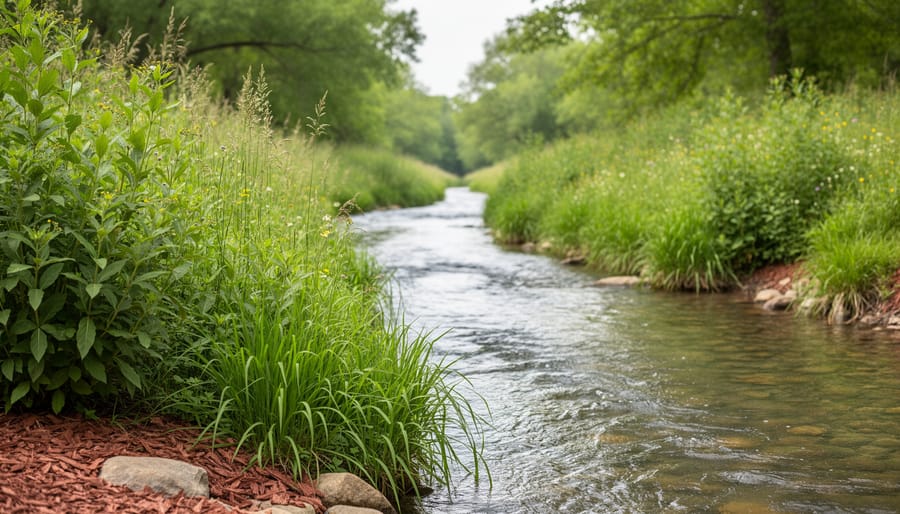
Gardening with creekside means cultivating native plants along streams, rivers, and waterways to restore habitat, prevent erosion, and filter runoff before it reaches the water. This approach transforms the narrow strips of land beside creeks into thriving wildlife corridors that support pollinators, songbirds, and aquatic life while protecting water quality for entire communities downstream.
If you live near a waterway or manage land that borders one, you’re sitting on some of the most ecologically valuable real estate in your neighborhood. Creekside zones act as nature’s kidneys, catching sediment and absorbing fertilizers, pesticides, and other pollutants before they enter streams. When planted with the right native species, these buffer strips can reduce nutrient runoff by up to 80 percent while creating essential green highways for wildlife moving through increasingly fragmented landscapes.
This guide walks you through the essentials of creekside gardening in 2026: what makes these riparian zones so important, how native plants work together to stabilize banks and improve water quality, which species thrive in wet-to-dry transitions, and how to get started with your own project. You’ll learn from community groups already restoring urban creeks, discover which grasses and shrubs handle seasonal flooding, and connect with local resources like plant clinics that offer region-specific advice. Whether you’re reclaiming a backyard stream bank or joining a volunteer restoration day, you’ll find practical steps to turn your waterway edge into a functional, beautiful sanctuary.
What Is Creekside Gardening?
Creekside gardening is the practice of planting native species along streams, rivers, and other waterways to create thriving wildlife habitat while protecting water quality. This approach focuses on establishing native grasses, wildflowers, and other riparian plants in the zone between water and upland areas, transforming what might be a mowed lawn into a functional ecosystem that filters runoff, stabilizes soil, and provides food and shelter for pollinators, birds, and other wildlife.
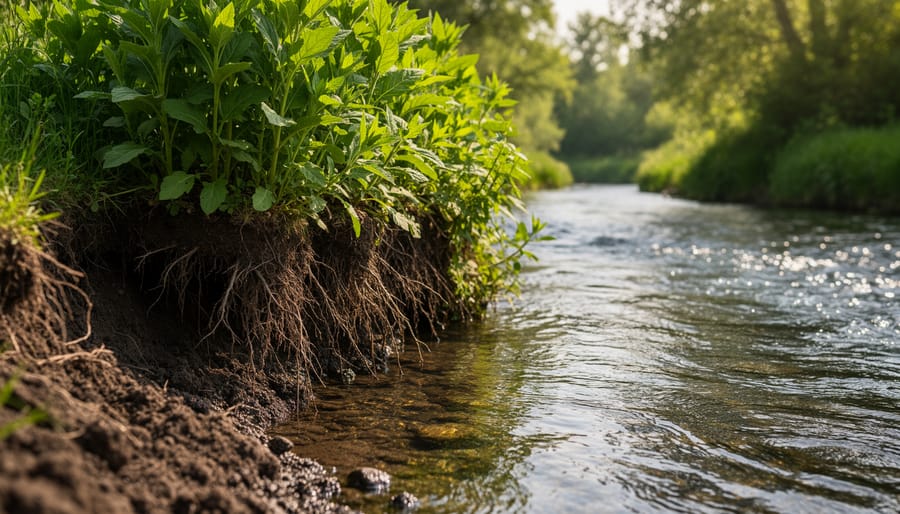
The riparian zone, the strip of land immediately adjacent to a waterway, plays an outsized role in ecosystem health. When planted with deep-rooted natives rather than turf grass, this buffer absorbs excess nutrients and sediment before they reach the water, reducing pollution and algae growth. Native plants in these zones also create vital habitat corridors that connect isolated patches of wildlife habitat, allowing species to move, feed, and reproduce across the landscape.
- Riparian Zone
- The area of land directly beside a stream, creek, or river where soil and vegetation are influenced by the presence of water. This transition zone between water and upland is critical for filtering pollutants and providing wildlife habitat.
- Native Plant Corridor
- A strip of native vegetation that connects separate habitat areas, allowing wildlife to travel safely between meadows, wetlands, woodlands, and waterways. These corridors can run along roads, creeks, field edges, or forest borders.
- Buffer Zone
- A protective strip of vegetation along a waterway that filters runoff, stabilizes banks, and creates habitat. Buffer zones planted with native species provide far more ecological benefits than mowed grass.
Creekside gardening works at any scale. You might transform a narrow strip along a backyard stream or participate in larger community efforts like the Canadian Wildlife Federation project along Green’s Creek near the Ottawa River, where native grasses and wildflowers now thrive in a space that was once routinely mowed. The key is choosing plants adapted to your local conditions and understanding how they function together to support the waterway ecosystem.
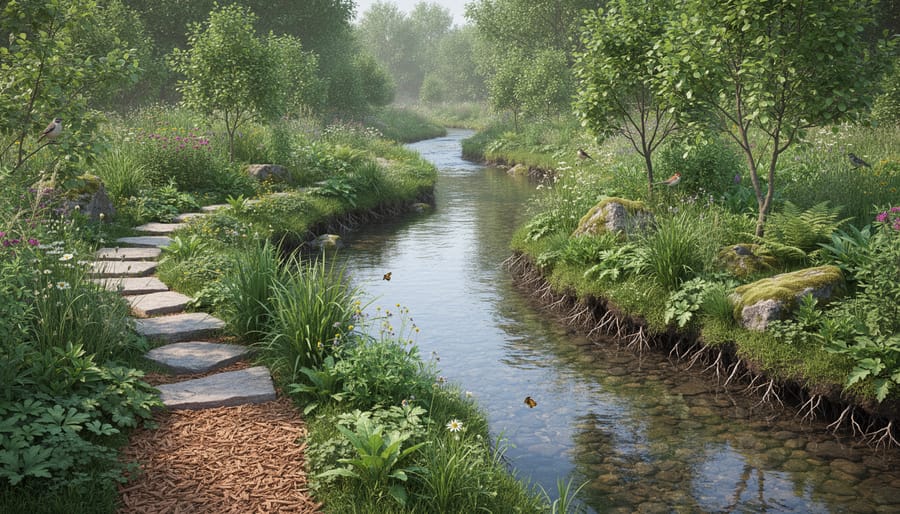
How Creekside Gardening Works
Creating Habitat Corridors Along Water
Native plant corridors along creeks function as living bridges, allowing wildlife to move safely between isolated patches of habitat. When you establish a corridor, you’re creating a route that connects creek-edge plants to nearby meadows, wetlands, or woodlands, places where pollinators, birds, and small mammals can forage, nest, and shelter. Research shows that native corridors connect habitats that would otherwise be cut off by roads, mowed lawns, or development.
The Étienne Cartier Parkway project near Ottawa illustrates how a corridor works at scale. The Canadian Wildlife Federation and National Capital Commission planted a 100-meter by 30-meter strip where Green’s Creek empties into the Ottawa River, seeding it with native grasses and wildflowers. This corridor doesn’t just beautify the roadside; it provides a pathway for insects moving between the creek and surrounding natural areas, while filtering runoff before it reaches the water.
Even a narrow band of natives can serve this purpose. A corridor might run along a property line, follow a drainage swale, or edge a woodlot, anywhere that links one habitat patch to another and offers safe passage.
Changing Mowing Habits to Support Native Species
One of the simplest ways to start creekside gardening is to mow less near the water. Instead of cutting grass all the way to the bank, leave a strip unmowed, 10 to 15 feet wide if you have the space. This gives native plants already in the soil (or arriving as seeds from nearby) room to grow, flower, and spread. Mow this buffer once or twice a year in late fall or early spring, after plants have set seed and wildlife have used them. Cut high, around six inches, to protect the crowns. This approach lets natives like asters, goldenrods, and grasses outcompete weeds over time, especially when you pair it with spot-treating invasives by hand. You’re not abandoning the area, you’re managing it with wildlife and water quality in mind.
Types of Creekside Plantings and Components
Native Grasses for Bank Stabilization
Deep-rooted native grasses anchor streambank soil with fibrous root systems that can reach several feet down, preventing erosion even during spring floods or heavy rains. The Canadian Wildlife Federation and National Capital Commission chose four proven natives for their Étienne Cartier Parkway creekside demonstration site, all of which establish quickly and thrive in riparian conditions:
- Virginia Wildrye, forms dense clumps with roots that bind loose soil, tolerates periodic flooding
- Big Bluestem, develops deep roots up to 8 feet, excellent for upper bank stabilization
- Little Bluestem, adapts to drier bank edges, provides year-round structure and winter interest
- Indiangrass, offers robust erosion control with strong root mass, supports nesting birds
These grasses work best when planted in mixed stands rather than monocultures. Their staggered root depths create overlapping layers of soil reinforcement, and their upright growth slows water velocity during runoff events. Most establish fully in two to three seasons, requiring minimal maintenance once their root systems mature.
Wildflowers and Pollinator Plants
Flowering natives are the showstoppers of a creekside garden, drawing in butterflies, bees, and beneficial insects while also providing seeds and shelter for birds. These native pollinator plants thrive in the moist to moderately dry conditions typical of riparian zones, creating months-long blooms from spring through fall. The Canadian Wildlife Federation and National Capital Commission project along Étienne Cartier Parkway included several proven performers:
- Milkweeds, essential for monarchs, tolerate moist to average soils
- Joe-Pye Weed (Eupatorium maculatum), tall purple blooms, attracts swallowtails, prefers consistent moisture
- Sneezeweed (Helenium autumnale), bright yellow fall flowers, thrives in wet areas
- Evening-primrose (Oenothera biennis), opens at dusk for night pollinators, adaptable to drier zones
- Brown-eyed Susan (Rudbeckia hirta), reliable summer bloomer, tolerates varied moisture
- Virginia Mountain Mint (Pycnanthemum virginianum), aromatic foliage, bee magnet, handles moderate moisture
Plant these in drifts of three to five rather than singles for greater visual impact and to make it easier for pollinators to locate nectar sources. Position moisture-loving species like Joe-Pye Weed and Sneezeweed closer to the water’s edge, and place adaptable bloomers like Evening-primrose and Brown-eyed Susan in the transitional upland buffer where soils drain faster.
Layered Planting Zones
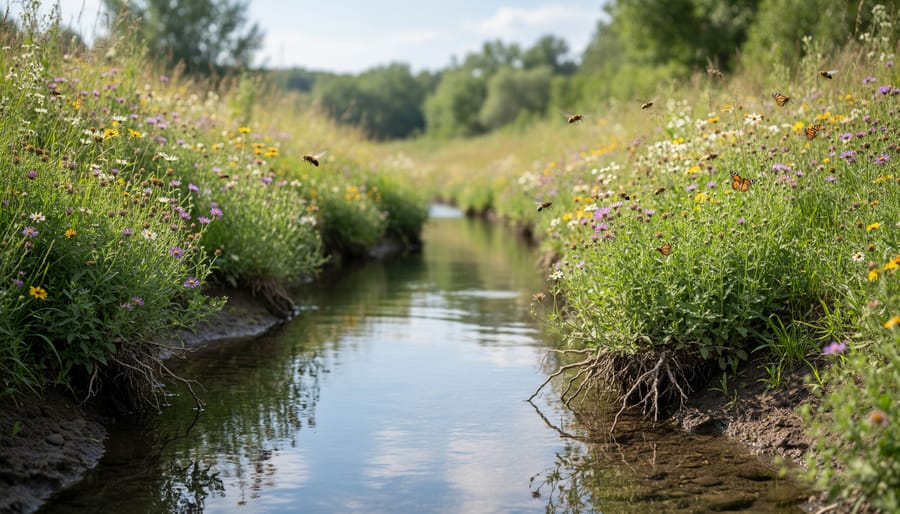
Successful creekside gardens mirror nature’s own layering. Start at the water’s edge with plants that tolerate wet feet, sedges and rushes anchor the bank. Move back a few feet into the wet zone, where Joe-Pye Weed and Sneezeweed thrive in consistently moist soil. The moist zone, three to six feet from the water, supports Little Bluestem and Brown-eyed Susan, which handle occasional dryness. Finally, the upland buffer transitions to dry-soil natives like Big Bluestem and Virginia Mountain Mint. This gradual shift from aquatic edge to upland creates overlapping habitats. Each zone filters different types of runoff and provides shelter for different wildlife, from dragonflies near the water to bees in the drier buffer. Think of it as building a green gradient rather than a single border.
Uses and Benefits of Creekside Gardening
Creekside gardening delivers measurable benefits to your property, your neighborhood, and the ecosystem at large. When you establish native plantings along streams, ditches, or drainage corridors, you create a living filter that captures sediment and pollutants before they reach the water. This protects aquatic life downstream and improves overall water clarity.
The habitat value is equally significant. Native riparian zones provide food, shelter, and breeding sites for amphibians, songbirds, butterflies, and beneficial insects that struggle to survive in mowed turf. These planted corridors act as wildlife highways, connecting isolated patches of habitat across developed landscapes. A creek buffer planted with natives becomes a travel route for species moving between larger natural areas, which is critical as urban and suburban sprawl fragments their range.
Key benefits of creekside gardening include:
- Water quality improvement through natural filtration of runoff and sediment capture
- Year-round wildlife habitat for birds, amphibians, pollinators, and beneficial insects
- Pollinator support from native flowering plants that bloom in succession through the growing season
- Erosion control with deep-rooted grasses and perennials that stabilize stream banks
- Flood mitigation by slowing water flow and allowing greater absorption during heavy rains
For property owners, these plantings reduce maintenance once established. You eliminate mowing along the waterway and replace high-input turf with self-sustaining natives. Many homeowners also find that applying wildlife-friendly garden tips to their creekside area creates a focal point for outdoor observation and education, especially for children learning about local ecosystems.
At the community scale, coordinated creekside projects multiply these benefits across entire watersheds, creating continuous habitat networks that support larger, healthier wildlife populations.
Getting Started with Your Creekside Garden
Start by walking your property line where it meets the creek or stream. Note where water flows fastest during rain, where banks show erosion, and where existing vegetation already thrives. Measure the distance from the water’s edge to identify your planting zones, typically a wet zone within five feet of water, a moist transition zone, and an upland buffer beyond.
Contact your local Extension Master Gardeners through a Plant Clinic to get site-specific advice for your watershed. They can identify which native grasses and wildflowers suit your soil conditions and connect you to regional native plant suppliers. This expert guidance helps you start a sustainable garden tailored to your creek’s ecology rather than guessing from generic plant lists.
Check with your county or municipality about any setback requirements or protected zones along waterways. Some areas restrict plantings within certain distances of streams, while others encourage riparian buffers and may offer cost-share programs for native plantings.
Begin small with a 10-by-20-foot test area rather than tackling your entire creek bank at once. Choose three to five native species proven in your region, grasses like Virginia Wildrye for stability, plus pollinator plants such as Joe-Pye Weed or Sneezeweed for wildlife value. Plant in fall when cooler temperatures reduce stress, and plan to water weekly through the first growing season until roots establish.
Common Questions About Creekside Gardening
What is a native plant corridor?
A native plant corridor is a strip of native vegetation that connects one habitat area to another, such as linking a creek to nearby meadows, wetlands, or woodlands. These corridors can run along roads, between fields, in swales, or at forest edges, creating pathways for wildlife movement and seed dispersal.
How do creekside corridors support pollinators?
Creekside corridors planted with native wildflowers like milkweeds, Joe-Pye Weed, Sneezeweed, and Virginia Mountain Mint provide continuous nectar and pollen sources throughout the growing season. The proximity to water creates a reliable pollinator habitat that connects to broader landscapes, supporting bees, butterflies, and other beneficial insects.
What is a riparian buffer?
A riparian buffer is the vegetated zone between water and upland areas that protects water quality by filtering runoff, stabilizing banks, and providing shade. Native grasses and wildflowers in this zone prevent erosion while creating wildlife habitat.
Do I need permission to plant near a creek?
Regulations vary by location and may require permits for planting within a certain distance of waterways. Contact your local Extension Master Gardeners through a Plant Clinic or county Extension office for guidance specific to your area before starting your project.
Understanding what wildlife gardening is helps clarify how creekside plantings fit into a broader conservation approach. Many gardeners worry about maintenance demands, but native plant corridors typically require less upkeep than traditional lawns once established. The first growing season demands regular watering and weed management, but after two years most creekside natives develop deep root systems that make them largely self-sufficient.
Another common question involves adjusting mowing habits along waterways. You don’t need to eliminate mowing entirely. Instead, create unmowed zones closest to the water where native species can establish, while maintaining shorter grass in transition areas. This approach balances tidiness with habitat creation and works well for homeowners concerned about property appearance.
Every creekside garden you plant becomes part of something larger. When you establish native grasses and wildflowers along your waterway, you’re not just beautifying your property, you’re creating a stepping stone in a wildlife corridor that can connect forests, wetlands, and meadows across your region. These riparian habitats support migrating pollinators, provide cover for amphibians, and filter runoff before it reaches the water.
You don’t have to tackle this alone. Extension Master Gardeners and local Gardening Help Desks offer site-specific guidance tailored to your soil, sun exposure, and regional natives. They can help you identify which plants will thrive in your creek’s wet zones versus the drier upland transition areas, and they’ll steer you away from aggressive spreaders that might outcompete more delicate species.
Start small if you need to, even a narrow strip of Virginia Wildrye or Joe-Pye Weed makes a difference. As your creekside garden matures, you’ll notice more butterflies, songbirds, and beneficial insects. You’ll also join a growing community of gardeners who understand that caring for creeks means caring for the life they sustain.