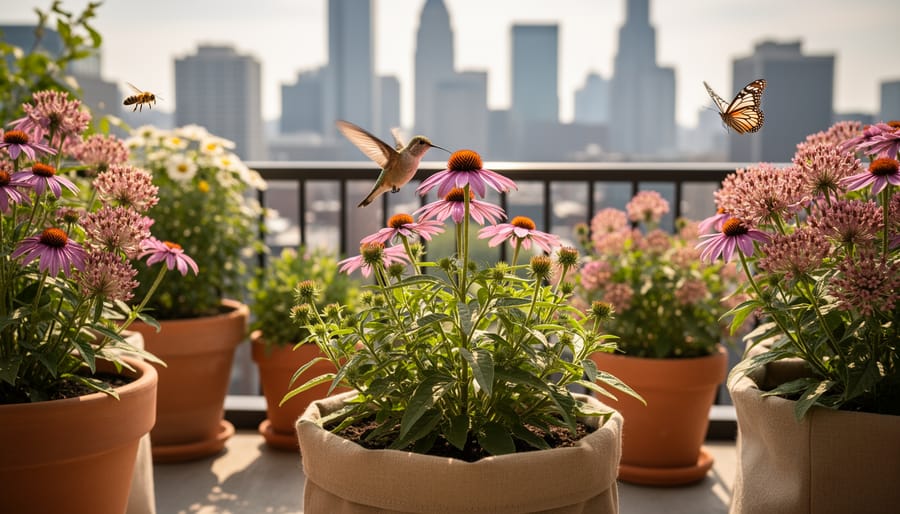
You don’t need acreage to make a difference for pollinators and wildlife. A single pot on a balcony can provide crucial nectar sources for bees, butterflies, and hummingbirds struggling to find food in urban environments.
Container gardening removes the barriers that stop many people from growing plants. No yard? Use your patio, fire escape, or front steps. Poor soil? You control exactly what goes in each pot. Limited mobility? Raise containers to a comfortable height and tend them without bending or kneeling.
The results speak for themselves. Master gardener Sarah Chen started with three containers of native wildflowers on her Chicago apartment balcony in 2025. Within weeks, she counted visits from seven bee species and multiple butterfly varieties. “I never imagined such a small space could support so much life,” she told us last month.
The timing couldn’t be better. Longwood Gardens recently launched workshops teaching container techniques specifically for pollinator support, recognizing that these portable gardens serve as stepping stones that connect fragmented habitats across cities and suburbs. When you fill containers with the right plants and place them strategically, you create refueling stations that help wildlife move through concrete landscapes.
Starting is simpler than you think, and the impact grows with every gardener who joins in.
Why Container Gardens Matter for Pollinators and Wildlife
Urban and suburban landscapes are increasingly dominated by pavement, lawns, and non-native ornamentals that offer little to wildlife. Container gardens fill critical gaps in these environments, creating stepping stones of habitat that help pollinators and beneficial insects navigate through food deserts. A cluster of nectar-rich containers on a balcony or patio provides rest stops for butterflies and bees traveling between larger green spaces, effectively extending wildlife corridors into areas where ground-level planting is impossible.
These portable ecosystems deliver outsized environmental benefits relative to their small footprint. Container gardens allow apartment dwellers, renters, and homeowners with tiny yards to participate meaningfully in pollinator conservation without breaking ground or securing landlord permission for permanent landscape changes. The concentrated plantings in containers often create dense floral resources that are easier for foraging bees and butterflies to locate than scattered individual plants in a traditional garden bed.
Birds benefit too, visiting container gardens for insects attracted to the flowers, seeds from spent blooms, and water that collects in saucers. Even beneficial predatory insects like ladybugs and lacewings find refuge among container-grown plants, where they hunt aphids and other pests while contributing to local ecosystem balance.
Choosing the Right Containers for Wildlife-Friendly Gardening
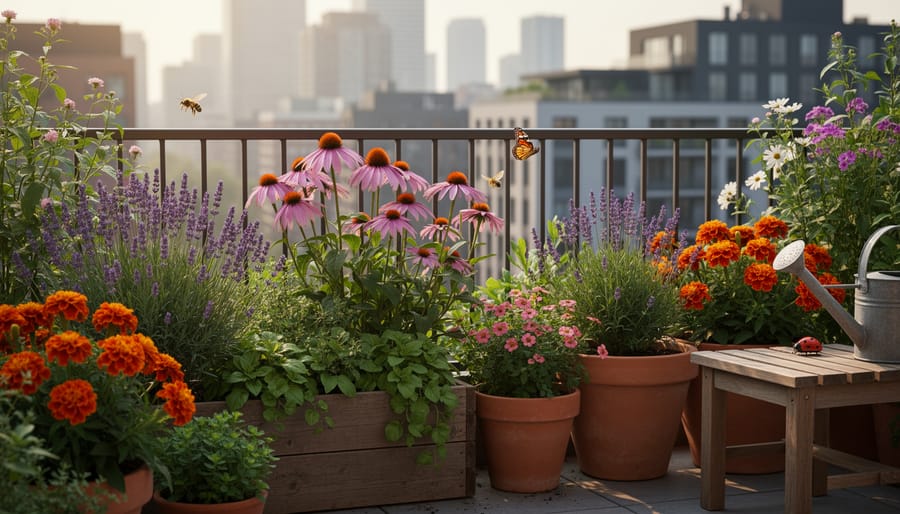
The containers you choose shape both plant health and pollinator success, so think beyond mere decoration. Start with size: most flowering perennials need containers at least 12 inches deep and wide to develop robust root systems that support continuous blooms. Larger pots also hold more soil, which means better moisture retention and less frequent watering during hot summer weeks when pollinators need reliable nectar sources.
Container drainage is critical for preventing root rot and maintaining the vigorous growth that produces flowers. Look for pots with multiple drainage holes, or drill your own if needed. Avoid saucers that trap standing water, which can drown roots and create mosquito breeding grounds instead of pollinator habitat.
Material choice affects both your plants and your maintenance routine. Terracotta breathes well and prevents overwatering, but dries out quickly in full sun and requires vigilant watering. Plastic containers retain moisture longer and weigh less, making them practical for balconies with weight limits. Wood planters offer insulation against temperature swings and age beautifully, though they’ll need replacing every few years as they decompose.
Group containers in clusters of three or more rather than spacing them individually across your space. Pollinators locate food sources more easily when flowers are massed together, and clustered containers create microclimates that help plants thrive. Mix heights and widths to create visual layers that mimic natural plant communities, placing taller containers toward the back and shorter ones in front where bees and butterflies can access blooms easily from multiple angles.
Plants That Transform Containers into Pollinator Havens
Native Perennials for Containers
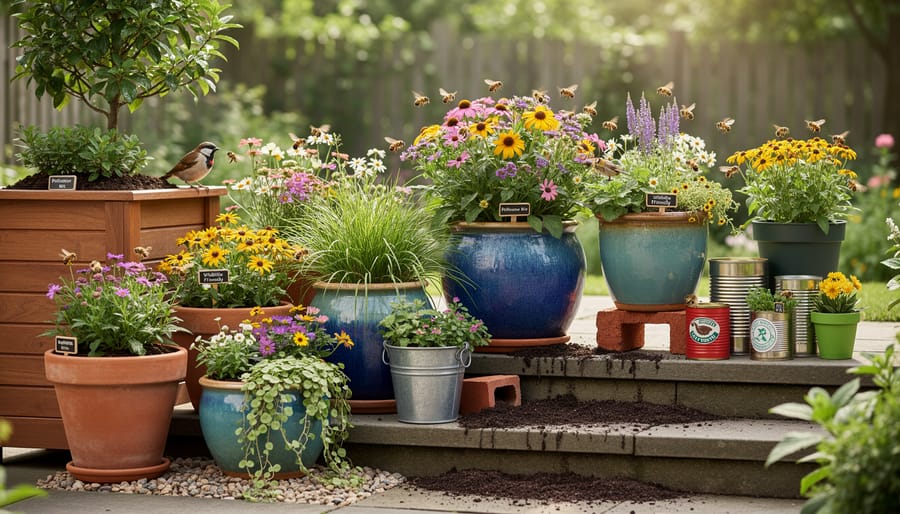
Native perennials are the workhorses of wildlife-friendly container gardens, returning year after year while providing reliable nectar and pollen sources. Purple coneflower (Echinacea purpurea) tops the list, growing 18-24 inches tall in containers and attracting butterflies, bees, and goldfinches that feast on its seed heads. Its compact varieties like ‘PowWow Wild Berry’ fit perfectly in 12-inch pots.
Black-eyed Susans (Rudbeckia hirta) bring cheerful yellow blooms from midsummer through fall, thriving in containers with just six hours of sun. They’re tough, drought-tolerant once established, and beloved by native bees. Wild bergamot (Monarda fistulosa) adds fragrant lavender flowers in mid-summer, drawing hummingbirds and specialist bees while resisting mildew better than garden varieties when given good air circulation.
For shadier spots, coral bells (Heuchera americana) offers delicate flowers on 12-inch stems that hummingbirds adore, plus attractive foliage all season. Pair these native pollinator plants with appropriate container sizes (at least 10-12 inches deep) and well-draining potting mix amended with compost, and they’ll reward you with years of blooms and visiting wildlife.
Annuals and Herbs That Feed Pollinators
Annuals and herbs offer the fastest route to a pollinator-packed container garden, with many blooming within weeks of planting. Zinnias top the list for ease and impact, they tolerate heat, shrug off beginner mistakes, and produce waves of nectar-rich flowers in every color except blue. Cosmos follow close behind, self-sowing freely and attracting butterflies with their daisy-like blooms that keep coming until frost. For edible options that pull double duty, basil flowers draw bees while you harvest leaves for cooking, and oregano becomes a magnet for native bees when allowed to bloom in midsummer. Catmint, alyssum, and verbena fill gaps between taller plants, creating landing pads for smaller pollinators. Mix three or four varieties in a single large container, placing taller zinnias or cosmos at the back and low-growing herbs along the front edge. This layered approach maximizes bloom surface while giving pollinators clear flight paths to each flower.
Creating Seasonal Succession
Think of your containers as a relay team, where each plant passes the baton of blooms to the next runner. Start your season with spring beauties like creeping phlox and wild columbine, which emerge early when hungry bees need their first meals. As these fade in late May, mid-season bloomers such as coneflowers and bee balm take center stage through the heat of summer. Finally, your anchor plants, asters and goldenrod, carry pollinators through September and October when food sources become scarce.
The key is mixing all three bloom times in a single container. Pair early spring bulbs with perennials that bloom later, or combine quick-starting annuals like alyssum with late-blooming salvias. This layered approach means you are not just creating a pretty container garden, you are establishing a dependable food source that keeps butterflies, bees, and hummingbirds visiting your space from snowmelt to first frost. Even a small balcony can become a vital stopover in the pollinator highway when your containers provide nonstop nectar.
Setting Up Your Wildlife Container Garden
Start by selecting a container at least 12 inches in diameter and deep enough to support healthy root systems. Drainage holes are non-negotiable, they prevent waterlogging that kills plants and creates mosquito breeding sites. If your favorite pot lacks holes, drill a few or use it as a decorative outer sleeve for a functional inner pot.
- Fill the container with high-quality potting mix, not garden soil. A blend designed for containers provides the right balance of drainage and moisture retention that plants need to thrive while supporting beneficial microorganisms.
- Choose your plants based on your light conditions. Group sun-lovers like coneflowers and zinnias together in spots that receive six or more hours of direct sunlight. Shade-tolerant options such as columbine work better for north-facing balconies or covered patios.
- Arrange taller plants toward the back or center, medium-height bloomers in the middle, and trailing varieties near the edges. This layering creates visual interest while ensuring every plant receives adequate light.
- Plant at the same depth they sat in their nursery pots, firming the wildlife-friendly soil gently around roots to eliminate air pockets. Leave about an inch of space between the soil surface and the container rim for easy watering.
- Water thoroughly until it drains from the bottom, settling the soil and giving roots immediate moisture. Add more potting mix if settling creates depressions.
Position your finished container where pollinators can easily spot it. Cluster several pots together rather than scattering them, groupings create a more visible beacon for bees and butterflies. Place containers near windows where you can watch visiting wildlife, but avoid spots directly under eaves where rain can’t reach them. A south or west-facing location typically provides the brightest light, though morning sun with afternoon shade works well in hot climates.
Consider accessibility for maintenance. You’ll need to reach your containers regularly for watering and deadheading, so keep them within comfortable range rather than tucked in hard-to-reach corners.
Caring for Your Pollinator Containers Throughout the Season
Successful pollinator containers need consistent care that supports both plant health and visiting wildlife. Water your containers deeply when the top inch of soil feels dry, checking daily during hot weather since containers dry out faster than in-ground gardens. Morning watering gives foliage time to dry before evening, reducing disease problems while ensuring pollinators find fresh nectar throughout the day.
Feed your plants with organic fertilizers that won’t harm beneficial insects. Compost tea, diluted fish emulsion, or slow-release organic granules provide nutrients without the harsh chemicals found in synthetic products. Apply fertilizer at half the recommended strength every two to three weeks during active growth, avoiding over-fertilization that produces lush foliage but fewer blooms.
Deadheading spent flowers encourages most plants to produce more blooms, extending the nectar supply for hungry pollinators. However, leave some seedheads on native perennials like coneflowers and black-eyed Susans in late summer. These seeds provide food for goldfinches and other songbirds well into fall and winter, demonstrating how eco-conscious techniques create multiple layers of wildlife value.
Skip the pesticides entirely. If aphids or other pests appear, blast them off with water or introduce ladybugs and lacewings that naturally control problem insects. Most pest issues in healthy containers resolve themselves as beneficial predators discover your garden. Remember that caterpillars munching leaves often become the butterflies you’re trying to attract. A few nibbled leaves signal a thriving ecosystem rather than a problem requiring intervention.
Learning from the Experts: Community Resources and Workshops
You don’t have to figure out container gardening on your own. Local workshops and gardening programs offer hands-on guidance that can fast-track your success while connecting you with fellow wildlife enthusiasts.
Longwood Gardens in Pennsylvania hosts a Pollinator Container Workshop on Friday, August 28, 2026, from 9:30 to 11:00 am at The Grove Studio. Horticulturist Clay Stradley leads this in-person class where participants create their own mini pollinator garden to take home. You’ll learn which plants attract pollinators, how to care for your containers, and discover practical ways to welcome biodiversity to your patio, front steps, or balcony. This adult learning experience is perfect for anyone curious about adding wildlife garden features to even the smallest outdoor space.
Beyond specialty gardens like Longwood, your local Extension Master Gardener program offers free or low-cost classes, plant clinics, and community garden tours. Many county Extension offices host spring container gardening workshops tailored to regional growing conditions and native plant selections. Check community colleges, botanical gardens, and nature centers in your area for seasonal classes.
Online forums and local gardening clubs provide ongoing support once you’ve started. These communities share regional plant recommendations, troubleshoot problems together, and often organize plant swaps where you can find pollinator-friendly varieties without breaking your budget. Learning alongside others makes container gardening more enjoyable and increases your chances of creating thriving habitats for local wildlife.
You don’t need acres of land or a sprawling yard to make a difference for pollinators and wildlife. Start with one container on your doorstep or balcony. Plant a few native flowers, add an herb or two, and watch butterflies and bees discover your small haven. Each pot you fill becomes part of a larger network of habitat that supports struggling pollinator populations right where you live.
Container gardening connects you to a growing community of wildlife stewards who understand that collective small actions create real change. Share photos of your first blooms, swap plant recommendations with neighbors, and celebrate the monarch that stops by your patio zinnias. Your success story, no matter how modest it seems, inspires others to try. Together, we’re building pollinator corridors one container at a time.